If you can't see this newsletter properly, please click here

Issue 73

image

Hope everyone had a great Halloween and got your fill of costumes, candy, and questionable decisions involving glow sticks.


Now that the sugar crash has kicked in, we’ve got the perfect thing to bring you back to life — a jam-packed issue of SeniorInspire the Newsletter!


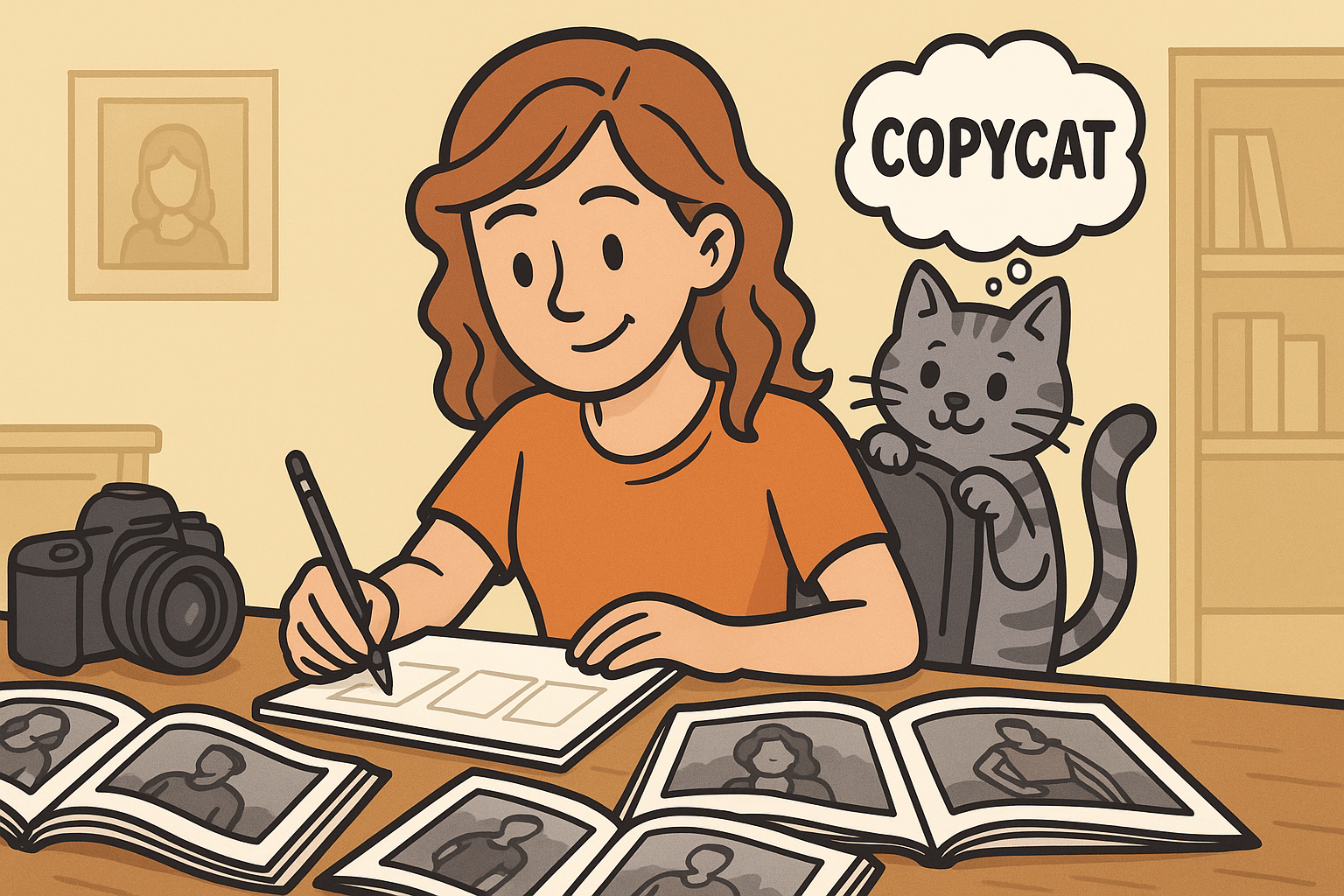
This week, we’re talking about the fine line between being inspired and outright copying — and how to walk it without falling into “Pinterest clone” territory.


We’re also digging into the math behind your pricing, helping you figure out the session average you actually need to hit your goals — and how to build a pricelist that supports it instead of sabotaging it.


In Why I Love This Image, we’re featuring a fun, stylish portrait from Tricia Burns (bonus points for including a dog 🐶), and our Mentor of the Week is the inspiring and wildly creative True Moua.


So let’s shake off the Halloween fog and dive in!


--Nick


image


This Week’s Question:
Is it ok to use other photographers’ ideas — or is there a better way to borrow without straight-up copying?


Here’s the truth: we all “borrow” ideas. Every photographer does. Every artist does. Every musician, writer, and designer does too. Nobody creates in a vacuum.


So let’s start by getting this out of the way — it’s not a crime to be inspired by someone else’s work. The trick is learning how to take that spark and make it your own, instead of just recreating what someone else has already done.


If your portfolio looks like a karaoke version of someone else’s greatest hits, it might be time for a creative reality check.


🧠 1. Let’s be honest — we all borrow ideas.

Every great artist starts out by imitating others. It’s how we learn. You see a lighting setup, a pose, a vibe — and you try it. That’s normal.


The problem comes when imitation becomes your default mode. “Steal like an artist” is good advice — as long as you’re remixing, not replicating.


Think of inspiration like seasoning. A little salt makes the meal better. Dump the whole container in, and it’s ruined.


🔍 2. Understand the difference between influence and imitation.

Inspiration is when you see a great photo and think, “Wow, I love the mood. How can I create something with that same energy?”


Copying is when you think, “I’m going to find that exact wall, pose my senior the same way, and use the same preset.”


A good rule of thumb: if the final image could be mistaken for the original, you’ve gone too far. Borrow ideas, not blueprints.


🎨 3. How to draw inspiration the right way.
If you take one idea from each of five photographers, that’s inspiration. If you take five ideas from one photographer, that’s copying. To draw inspiration the right way:


✅ Use other photographers’ work to learn technique — not to fill your portfolio.
✅ Study why an image works — the emotion, the light, the storytelling.
✅ Combine elements from multiple sources so your end result feels like a remix, not a replica.


💬 4. Be transparent if you’re referencing.

If your shoot was clearly inspired by someone else’s idea, there’s no harm in acknowledging it.
Say something like, “I saw a similar concept from [Name] and wanted to put my own twist on it.” But make sure you actually put a twist on it.


That kind of transparency doesn’t make you look unoriginal — it makes you look confident. Plus, it helps build community instead of tension.


Give credit where it’s due. You’ll earn more respect than pretending you invented golden-hour lighting.


image


⚙️ 5. Push yourself creatively.

When you see something you love, don’t ask, “How did they do that?” Ask, “What would happen if I did it this way?”


Try a different lens. Shoot in the opposite light. Change the pose, the outfit, or the setting.


Half the time, you’ll surprise yourself — and the other half, you’ll learn something useful. Even failed experiments move your creativity forward. Copying doesn’t.


🚫 6. Be especially cautious about copying local competitors.

Here’s where it gets messy. If you’re borrowing from a photographer halfway across the country, odds are no one will ever notice — and if you’re adding your own twist, no harm done.


But copying ideas from local photographers? That’s where lines get crossed fast.


Seniors (and their parents) talk. They follow multiple photographers in your area. If they see two identical shots in their feed, they’ll know who had the idea first — and it’s not going to reflect well on you.


Instead of trying to outdo the photographer down the street, focus on what you bring to the table. Your eye. Your tone. Your personality.


The more your work reflects you, the less you’ll ever need to worry about someone else’s style. Originality isn’t about doing something no one’s ever done — it’s about doing it in a way only you could.


❤️ 7. Final takeaway: Learn, evolve, repeat.

Every photographer starts by imitating. The goal is to learn from others, then evolve past it.


Borrow ideas, but remix them with your own style, your own story, and your own sense of curiosity.


Inspiration is everywhere. The goal is to develop your style to a point where someone sees your work, and knows exactly who created it — without checking the watermark.


Have a burning question you want answered in a future column? Head over to www.seniorinspire.com/asknick. I’ll be there manning the phones and waiting for your questions...


Why I Love this Image

Each week, I’m spotlighting one standout image from the thousands of senior photos we’ve featured over the years — in the magazine, on Instagram, and beyond. Whether it’s the light, the vibe, or just that unexplainable something, these are the images that made me stop and say, “Wow.” 


image


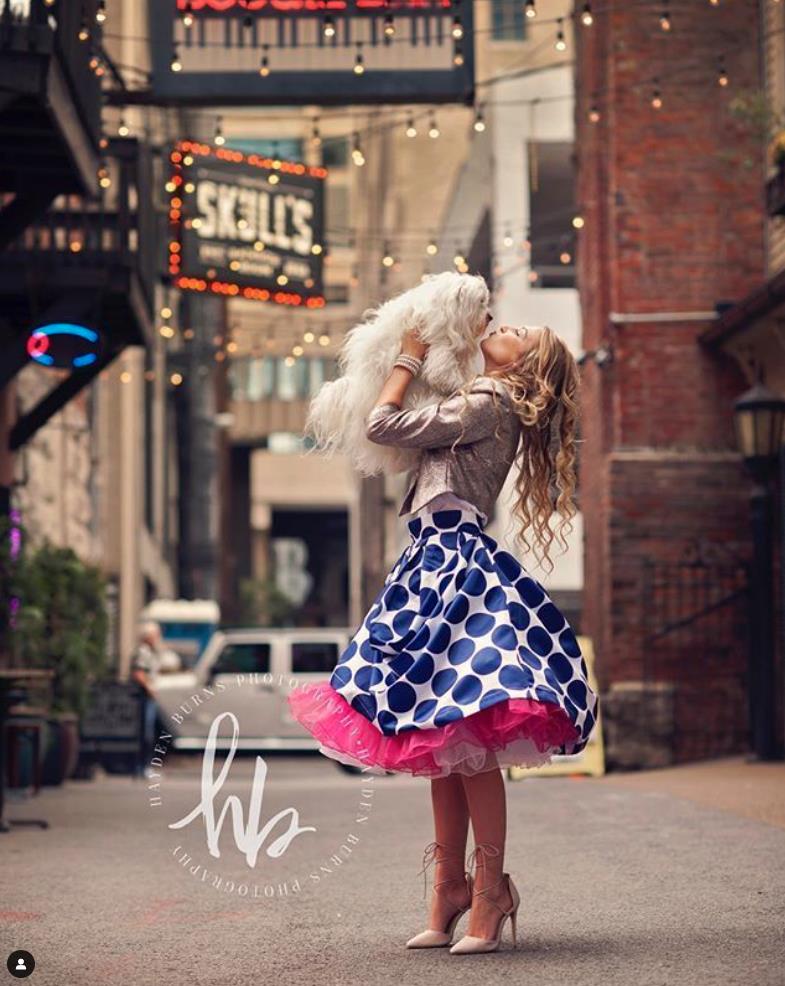
Today we're featuring an unforgettable image that appeared on our Instagram page several years ago, from Tricia Burns of Evansville, Indiana.


Let’s just get this out of the way — there’s a dog in this photo, so it already has a head start in my book. And not just any dog… an impossibly fluffy, perfectly timed, snuggle-ready pup who looks like they just floated into the frame to steal the show (and maybe a kiss).


Some of you are cat people — I respect that. But I’m a dog guy through and through, and this little scene just melts me.


But beyond the puppy points, there’s A LOT more to love here. The styling is fantastic. That blue-and-white polka dot skirt with the flash of hot pink tulle underneath is bold, playful, and somehow ties in with the scattered lights above.


The entire alley feels like it’s part of the story — a little bit urban grit softened by fashion and fur. And the heels? Totally unnecessary for an alley stroll, which is exactly what makes them great — they elevate the moment (literally and stylistically)

.

Where is she coming from? Maybe she just stepped out of the theater — still riding high from a killer performance — and now she’s heading toward that stretch limo parked at the end of the alley - or is that a jeep? Either way, it’s got that whole "starlet in the city" energy, and I’m here for it.


And let’s talk about that pose: It’s natural, sweet, and joyful. The lift of the dog, the tilt of her head, the kiss that’s just about to happen — it’s a moment you can feel. Combine that with the soft curls in her hair and the confident stance in those heels, and you’ve got a senior photo that perfectly balances elegance, personality, and whimsy.


If I had to offer a critique — and it’s a very small one — that bright building behind her could be toned down a touch. It doesn’t ruin the image by any means, but using a bit of the burn tool on that building would make it compete less for attention.


And one last thing, let's talk about the depth of field used here - it is spot on. The background falls off in a beautiful blur that keeps all the visual focus right where it belongs: on the senior and her pup, perfectly framed in a moment of joy.


So yeah, that’s why I love this image.


💰 Do Your Pricing Math — Then Make It Work for You 💰

image


A couple of weeks ago, we talked about step 1 in our pricing exercise - calculating your fixed and variable costs — the foundation of every pricing decision.


Then, last week, we moved on to step 2, defining your income goal — the number that keeps the studio lights on AND lets you meet your personal financial goals.


Now it’s time to bring those two pieces together and see what they mean in real dollars and cents.


💵 Step 3: Do the Math (Without Crying)

Here’s the part everyone dreads — but it’s not that bad, I promise.


If you’ve figured out your fixed costs (like rent, insurance, subscriptions) and your variable costs (like printing, packaging, and credit card fees), you already have the hard part done.


Now plug those numbers into this simple formula:


(Fixed Costs + Variable Costs + Desired Profit) ÷ Number of Sessions = Minimum Session Average.


That’s your magic number — the lowest average sale you can have and still hit your income goal.


For example, if you have a desired profit (DP)  of $80,000 after expenses, and your fixed costs (FC) are $12,000 with $100 in variable costs (VC) per session, shooting 60 seniors a year looks like this:


$12,000 FC + ($100 VC X 60 sessions) + $80,000 DP = $98,000 minimum needed sales


Which translates to:


$98,000 ÷ 60 sessions = 1,633 minimum session average


That’s the target average sale per client you would need in this case. Of course YOUR numbers will be different - your numbers, your reality.


It’s not a guess. It’s not what feels fair. It’s what keeps your business sustainable.


Now that you know that number, the question becomes: how do you build your price list so your clients naturally land right around it?


🎯 Step 4: Create a Product Mix That Supports Your Goal

Once you’ve got your target average, your job is to make sure your product offerings are designed to guide clients there.


If your desired average is $1,600, you might have a $1,400 collection that feels like a great deal and a $1,900 one that feels like an “upgrade.” Most clients will land right where you want them — between the two.


It’s not about manipulation. It’s about creating packages that reflect what your clients actually want — AND what makes your business profitable.


🧱 Keep It Simple: 3 or 4 Options Max

Too many choices overwhelm people. When clients freeze, they don’t buy.


Three to four collections are plenty. Here’s a basic structure that works beautifully for senior photographers:


1️⃣ The Starter Collection – Your lowest option. It’s there for the client who has to have the cheapest thing, but you don’t want to sell a ton of it. Keep it minimal. Maybe a few digital files or prints, but not much more.


2️⃣ The Sweet Spot (Your Target Collection) – This is the one you want everyone to buy. Price it around your desired average — maybe just slightly higher. Include the things your clients value most: digitals, a few small prints, maybe a proof box or album credit. It should feel like the best value.


3️⃣ The Premium Collection – Your “wow” option. Loaded with extras like wall art, albums, or premium editing. Price it significantly higher than your sweet spot so it makes your middle package look even more attractive by comparison.


4️⃣ (Optional) The All-In or Add-On Collection – This one’s for those rare clients who want it all. It’s your “sky’s the limit” package — and even if you never sell it, its existence anchors your other prices and makes your main package feel like a bargain.


💡 The Psychology Behind It

Clients rarely buy the cheapest or the most expensive option — they buy the best value.


That’s why your middle collection is the hero. It’s where the features align perfectly with what your ideal client actually wants — not just what you think they should want.


If you’re offering three packages, 80–90% of your sales should fall right in the middle. And if you’re not seeing that pattern? It’s a sign to tweak the structure or the included items until clients gravitate there naturally.


💬 How This Played Out in My Own Studio

When I was building my own product mix a decade ago, I realized my $900 average wasn’t going to cut it if I wanted to hit my income goals. I needed to get closer to $1,200.


So I started paying attention to what MY clients were really asking for — and it wasn’t giant wall art or canvases. It was digitals.


Parents wanted easy access to ALL the images. Seniors wanted them for Instagram. And everyone wanted to stop arguing over who got which photo.


So I created a digital collection that included all the culled photos (usually around 50 images for a two-hour session) on a USB key, with basic retouching, a full set of 5x7 proofs, and an image box to keep them in.


I priced that collection at $1,400 — about 20% above my target average — and built a few higher-end digital bundles above it that included wall art and albums. I also built a cheaper basic package with prints only that was priced slightly under a thousand dollars.


And you know what happened? The $1,400 collection became my bestseller. Some people bought the cheaper basic print package that brought them in the door and some bought the higher end digital/print collections, but my session average actually jumped to $1,400 almost overnight.


Clients felt like they were getting everything they wanted, and I hit my numbers without ever feeling like I had to “sell.”


🧠 The Takeaway

Your product mix should be strategic, not random. Every collection should have a purpose:

  • One sets your floor.
  • One hits your goal.
  • One raises your ceiling.

The magic is in how they interact — guiding clients right where you want them to land, while still feeling like they’re in control.


Because the truth is, the best sales process doesn’t feel like selling at all. It feels like helping people get what they want — and getting paid well for it.


P.S. Be sure to come back next week when we’ll talk about how to analyze your market (without falling into the comparison trap). Spoiler alert: copying someone else’s price list is like borrowing their glasses — you won’t see any clearer, and you’ll probably just get a headache.



advertisement

image

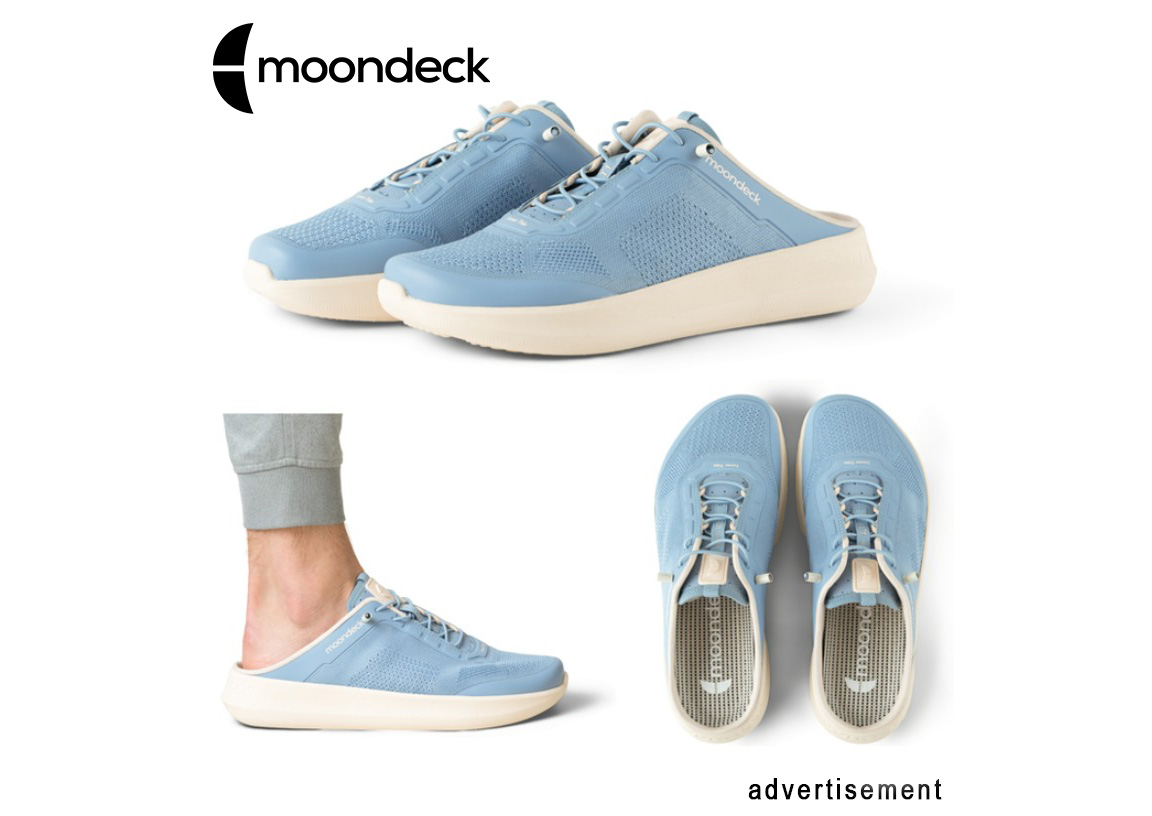
Could these be your new favorite session shoes?


Moondeck is a new backless shoe built to go anywhere — and honestly, they might just be perfect for sessions by the lake where sometimes you just need to be able to slip your shoes off fast.


The project’s already fully funded on Kickstarter, but there’s still time to grab a pair at early bird pricing. And while Kickstarter always comes with a little risk, they've already ordered their first production run and even got praise from legit shoemakers like Uggs.


Check them out here. And yes, if you pledge through my link, I get a free pair of colored insoles — influencer status unlocked.


Mentor of the Week

image

This week’s Mentor of the Week is True Moua, a Wisconsin-based photographer known for her creative and expressive portraits that beautifully blend artistry and emotion. With years of experience across senior, portrait, and wedding photography, True now shares her expertise through 1:1 mentoring, workshops, and online education. Her sessions are rooted in authenticity, intention, and helping photographers discover their unique voice — all while quietly proving that ambiverts can run powerhouse brands, too.


image

True Moua

Holmen, Wisconsin

What type of mentoring do you offer?

  • 1:1 sessions
  • Online
  • Workshops

Who is your ideal mentee?
I offer mentorship sessions for beginners as well as established photographers. Senior photography is my specialty, but I also mentor wedding and portrait photographers.


Did you have any mentors starting out?
No — I’m self-taught.


How would you describe your own shooting style?
My style blends creativity and artistry to capture portraits that feel unique and expressive.


image


What topics do you most enjoy mentoring on?
Finding your style and marketing.


What’s one underrated skill or habit photographers should be developing (but usually don’t)?
Training yourself to see the final image before you even press the shutter.


What’s something people might be surprised to learn about you (photography-related or not)?
I don't like meeting new people — LOL just kidding. But really, it’s actually not as easy as people think it is for me. I'm great at pretending it's easy and used to think I was an introvert, but I’ve realized I’m an ambivert. I have to mentally prepare myself.


image


How should potential mentees contact you?
📪 email: info@truemoua.com
🌐 website: truemoua.com

📸  instagram 


📢 Advertise with us

Are you teaching a workshop on the horizon, I’d love to help you spread the word. NO CHARGE - No strings.


Just send me the details and a graphic, and I’ll get it in front of a bunch of senior photographers who might want in.


SeniorInspire the Newsletter goes out to about 2,500 senior photographers across the country, and nearly half of them actually open it (the rest are slackers who probably don't go to workshops either).


Anyway, just reply to this email with the details and a graphic, and I’ll get it in front of a bunch of senior photographers who might just want in.


Simple as that.

 
image

If you made it this far and have any opinions or ideas I'd love to hear it. Good, bad, whatever. Just hit reply or send me an email and let me know what you think. I love the feedback!


image


Thanks for reading this week’s SeniorInspire the Newsletter.


This week’s Tune of the Week is “Been Caught Stealing” by Jane’s Addiction — a chaotic little anthem that felt right at home alongside our article on being inspired by other artists without straight-up lifting their work.


Look, we’ve all been tempted to “walk right through the door” and grab an idea or two when we see something we like — but in photography (and music, and life), there’s a big difference between inspiration and imitation.


Stealing’s easy. Creating something original from what inspires you? That’s where the real work — and real satisfaction — lives.


🎧 Been Caught Stealing – Jane’s Addiction


Until next week… stay weird, stay inspired, and make it yours (not theirs).


Nick
SeniorInspire


Play 


Not subscribed?  Go HERE to get on the list.

Unsubscribe me | Change my information