If you can't see this newsletter properly, please click here |
|
|
Welcome to this week’s edition of SeniorInspire the Newsletter — the one newsletter that won’t ask you to take a survey, update your password, or identify all the traffic lights in a photo.
We’re kicking things off this week with guest expert Annie Marie, who’s here to help you find your creativity — especially if yours has been in hiding since the middle of fall busy season (we won’t judge).
We’re also wrapping up our pricing series with the final installment on testing, tracking, and adjusting your numbers. Because setting your prices once and hoping for the best? Yeah… not exactly a winning business strategy.
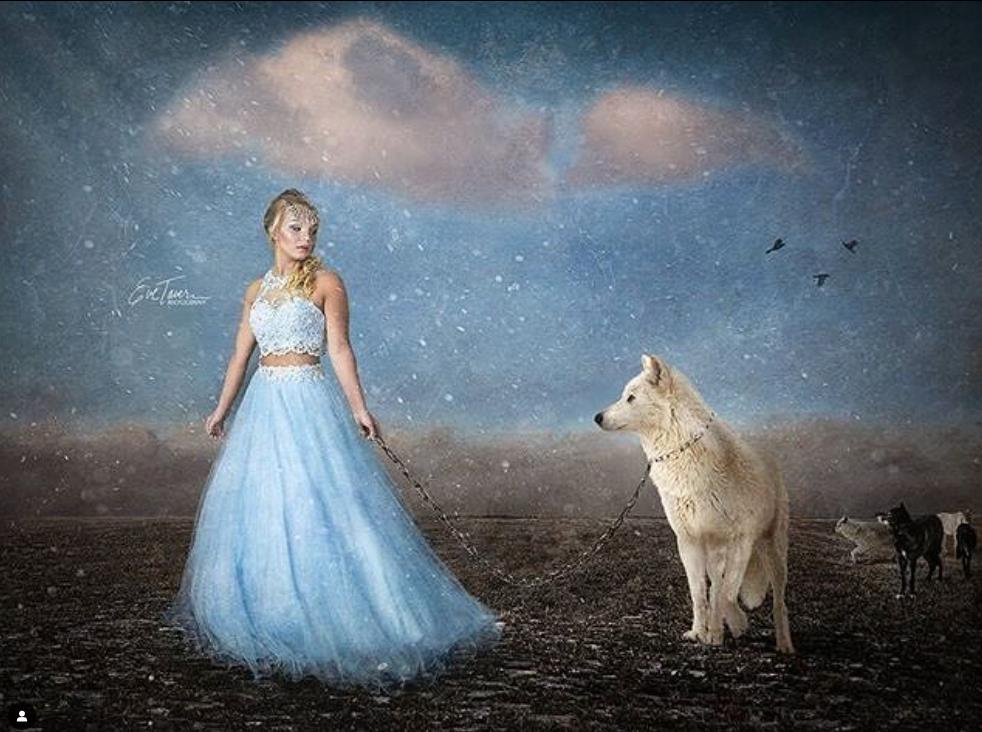
In Why I Love This Image, we’re featuring a beautifully styled, quietly powerful portrait from Eve Taverne that’ll have you zooming in for all the little details. And our Mentor of the Week is none other than Joe Baker, who brings a steady hand, tons of insight, and the kind of experience every photographer can learn from. Let’s get into it! --Nick |
This Week’s Question:
I used to have a million ideas for shoots, but lately, I feel stuck. What do you do when your creative mojo packs up and leaves town? |
If there’s one universal truth in photography, it’s that sooner or later your creative spark is going to ghost you.
And when that happens, it's nice to be able to talk to someone who lives and breathes inspiration. That's why I'm asking our creative friend, Annie Marie to tackle this week's question — when you need an expert on creativity, she should be one of your first stops.
And as a special bonus — Annie put together an incredible Black Friday offer for photographers at anniemarieco.com. Scroll down the newsletter for the details. Alright, here’s Annie… |
When Your Creative Mojo Goes M.I.A. By Annie Marie Trust me, I’ve been there more times than I can count. You have all these amazing ideas one season, and then suddenly… nothing. It’s like your creative spark just packed up and left town without warning. But here’s the thing: creativity doesn’t actually disappear — it just hides for a while. It can get overshadowed by stress, exhaustion, and being overworked, and sometimes our creative brain takes a vacation. When you learn to treat that downtime as part of the process instead of a problem, everything changes. Every creative person — whether they’re a photographer, artist, or writer — hits that “blah” phase. The trick is learning what helps you refill the tank. You can’t force creativity, but you can absolutely invite it back. Here are some of the ways I use to reignite my creative spark when my inspiration takes a hike:
🌿 1. Step Away
Sometimes the harder you try to think of new ideas, the more stuck you feel. Give yourself permission to take a break.Our creative brain tends to get exhausted the most during busy season. We obviously can’t just leave our clients behind while we take a vacation, but we can do little things in between to take mini breaks. Go for a walk. Watch a movie with beautiful cinematography. Hang out with friends. Inspiration often sneaks up when you’re not hunting for it. Scheduling some fun can actually benefit your business.
🎨 2. Look at Art Outside Your Genre for Inspiration
If you’re a photographer, don’t just scroll other photographers. Look at painters, designers, stylists, architects. Pay attention to color, texture, shape, and storytelling.
Creativity multiplies when you get inspiration from different mediums. Keep a journal of things you see that inspire you and write down why. Sometimes looking back will give you a fresh view.
💛 3. Give Yourself Grace
Sometimes we can be so hard on ourselves. We expect too much and expect perfection. We just need to realize that creative blocks are normal and we will get past it. The more pressure you put on yourself, the worse it can get. Allow yourself to just get through it.
🌍 4. Change Your Environment
A change of scenery can do wonders. Try shooting in a completely different location, working with new lighting, or even rearranging your space. Creativity thrives on adventure, and small shifts can spark big ideas. Sometimes we think using the same poses and locations helps us by creating a familiar workflow, but at the same time, it can put us in the rut we are trying to avoid because we can get bored.
🧸 5. Play Without Pressure
When creativity feels heavy, make it fun again. Photograph something random in an artistic way — your morning cup of coffee, shadows on the wall, or your sweet pet. It doesn’t have to be perfect or portfolio-worthy.
Play reminds your brain that creating can be lighthearted, not just productive. I love setting up creative sessions with favorite clients and just having a play date to create ideas I have, or just see what happens. There is no pressure… just fun, creative play.
🤝 6. Collaborate
Work with another creative person. It could be a friend, a makeup artist, or a model. Seeing how someone else interprets an idea can instantly reignite your excitement.
Or you can get together with a few photographer friends with a challenge to photograph the same subject in your own style… then compare images. It’s fun to see how others see the same thing.
⛽ 7. Fill ’Er Up
When you’re in a rut, it’s usually a sign your creative well is empty. Instead of pushing harder, fill it up with music, books, travel, laughter, and life. Creativity feeds on experience. The more you live, the more ideas you’ll have to draw from later.
🎯 8. Challenge Yourself With Limitations
Sometimes too many options cause paralysis. Give yourself a creative constraint like shooting only with one lens, one light, or familiar locations. Constraints force creativity because you’re problem-solving instead of overthinking.
This is pretty much the opposite of #4… what works for one might not work for someone else. Figure out what lessens the stress for you, which should help your creativity return from vacation.
🌈 9. Try Something Completely New
Do something outside your comfort zone: paint, write, garden, cook, redecorate your room, or even learn a new skill. Fresh experiences wake up different parts of your brain and often lead you right back to your creative groove.
🔥 10. Remember Why You Started
Go back to the feeling that made you fall in love with creating in the first place. Was it the thrill of trying something new? The joy of expression? The way time disappears when you’re in the zone? Reconnect with that “why.” Sometimes all your creativity needs is a reminder of its purpose.
💖 Final Thought
Feeling stuck doesn’t mean you’ve lost your talent — it just means you’re human. Creativity is a cycle of input and output, rest and growth. The quiet seasons give your imagination space to reset. So the next time your mojo goes missing, don’t panic. Pour into yourself, look for beauty in ordinary places, and trust that your spark is still there waiting for the right moment to light back up. |
Have a burning question you want answered in a future column? Head over to www.seniorinspire.com/asknick. I’ll be there manning the phones and waiting for your questions... |
Each week, I’m spotlighting one standout image from the thousands of senior photos we’ve featured over the years — in the magazine, on Instagram, and beyond. Whether it’s the light, the vibe, or just that unexplainable something, these are the images that made me stop and say, “Wow.” |
This week’s image comes from Eve Taverne of Utica, New York. It was featured by SeniorInspire several years ago, but it’s one of those timeless pieces that never really leaves your head once you’ve seen it.
From the moment you take it in, you know you’re looking at something more than just a pretty picture. The styling is absolutely gorgeous—the soft blue gown, the intricate beading, the wind-swept hair. Every detail has been chosen with care to complement the dreamlike feel of the image. But what really elevates this photo for me is the color harmony. The soft pastels of the sky, the white fur of the dog—or is that a wolf?—and the subtle blues in the dress all blend seamlessly, creating an almost storybook quality. It’s cool, cohesive, and beautifully restrained. There’s bit of texture layered into the scene that adds just the right amount of grit and depth without overwhelming the subject. It’s an edit that feels intentional, like something out of a fantasy film poster. And the falling snow? Perfect touch.
The connection between the subject and the animal is what seals the deal for me. Their eye lines, the lack of tension in the chain, the way they’re framed in the open landscape—there’s a feeling of mutual trust and understanding. You don’t just see this image, you feel it. So yeah, that’s why I love this image. |
👂 Pricing - Test, Track, Adjust… and Repeat 👂 |
Over the past month, we’ve walked through the entire process of building a pricing system that actually works — not just in theory, but in the messy reality of running a photography business. - Four weeks ago, we covered Step 1: Understanding Your Costs — the foundation of everything.
- Three weeks ago, we dug into Step 2: Defining Your Income Goals — figuring out what you want to earn, not what some workshop guru told you.
- Two weeks ago, we tackled Step 3: Doing the Math and Step 4: Creating a Product Mix — the real calculations and strategic package design that make profitable averages possible.
-
Last week, we explored Step 5: Analyzing Your Market — how to look around without copying, how to position yourself, and how to understand what your local clients actually respond to.
Which brings us to today — the final two steps that keep your pricing functional, profitable, and evolving as your business grows. Let’s dive in.
🧪 Step 6: Test & Track (Your Pricing in the Wild)
You can craft the most beautiful pricing guide in the world… but you never really know if it works until you put it in front of real people. Because here’s the thing: pricing is behavioral. Clients will show you — sometimes gently, sometimes aggressively — what they value and what they don’t.
Here’s what you should be tracking during every season: • Average sale per client
Does your pricing consistently land near your target average? Or does it swing wildly like a middle-school mood ring? • Time spent per client
Your average means nothing if you spent 36 hours per client achieving it. • Which packages clients choose
If everyone picks the cheapest one, that’s not a client problem — that’s a design problem. • Profitability after costs
Are you actually making money, or just moving it around like pocket change? • Booking volume
Too busy → raise prices.
Too slow → review your messaging, offer, or positioning. Watch for red flags: - Booked months ahead → you’re underpriced
- Endless client indecision → your collections are confusing
- Everyone requesting discounts → value mismatch
-
You’re burnt out and underpaid → pricing isn’t aligned with workload
Small tweaks beat massive overhauls
Your pricing doesn’t need a demolition crew. It usually just needs little changes like: - A 10% bump on your top tier
-
A middle collection that’s obviously the best value
- A session fee that better reflects your time
- A simplified package structure that clients “get” instantly
Testing isn’t about panic. It’s about paying attention.
🔄 Step 7: Revisit Annually
Once a year, during your slower season, you need to step back and review how everything performed. Because everything changes — your skills, your costs, your workflow, your local competition, your ideal client… everything.
Well, everything except the one senior every year who walks in and immediately announces, “Just so you know, I’m awkward.” Bless their hearts.
Here’s why the annual review matters: • Costs rise — always
Insurance, labs, software, packaging, props, travel, subscriptions… all of it increases quietly. If pricing stays flat while expenses climb, your profit shrinks without you noticing. • Your skills improve
Better posing. Cleaner lighting. Smoother sessions. Higher client satisfaction. If you’ve leveled up, your pricing should too.
• Markets evolve
New photographers appear. Some vanish. Trends shift. Clients want different things. Your pricing must evolve with your market — not trail behind it. Your annual check-up should include: - Recalculating your fixed and variable costs
-
Reviewing your real session averages
- Identifying which collections sold best
- Removing anything no one wants
- Updating your income goals
-
Adjusting for workflow changes
- Making sure you’re not undercharging for the value you now offer
- Checking your burnout level — seriously
Small, intentional shifts win the long game Your pricing doesn’t need a full rebuild every year. It just needs thoughtful adjustments that reflect the photographer you are today — not the one you were 12 months ago.
🎤 Final Thought
Pricing isn’t permanent. It isn’t something you carve in stone, laminate, and bury in the backyard. It’s a living, breathing part of your business — something you test, track, adjust, and revisit as the numbers (and your life) evolve. If you treat pricing as a system rather than a guess, you’ll always know where your money’s going, why it’s flowing, and how to keep it growing. And with that — congratulations. You’ve reached the end of the 7-step pricing series.
Your pricing is no longer a mystery. It’s a strategy.
Or is it? LOL. If you missed any of the 7 steps, go back and check out past issues of the newsletter at www.seniorinspire.com/newsletter |
advertisement - Annie Marie's Black Friday Special |
This week we’re shining the spotlight on Joe Baker, the talent behind Joe Baker Photography out in the “West Texas sticks” of Lubbock, TX. Joe is a photographer with a genuine passion for teaching others — especially when it comes to lighting. Known for his approachable style, creative energy, and commitment to helping photographers level up, Joe brings honesty, humor, and a whole lot of real-world experience to every mentoring session, whether it’s one-on-one, virtual, portfolio-based, or a hands-on lighting workshop.
|
What type of mentoring do you offer?
I like to offer 1:1 sessions, virtual sessions, portfolio reviews, but I especially love doing workshops about lighting! Sorry, but weddings, quinceañeras, and maternity are just not my jam and there are WAY better photographers that can help with that!
Who is your ideal mentee?
My ideal mentee is really anyone that wants to improve their skills with lighting. Usually, that’s beginners, but I have mentored seasoned natural‑light photographers who want to add off‑camera flash to their toolbox. I would probably gear my mentoring toward portrait work. Did you have any mentors starting out? What's one thing they told you that stuck with you?
Personally, I did not have any mentors starting out, so I went to the University of YouTube to learn most of my education. I also found that a lot of photographers were not very forthcoming with information, as they believed they were training their competition. I decided that when I got to the point that someone wanted to learn from me, I would be an open book. |
How would you describe your own shooting style?
I would describe my shooting style as more purposeful and clean. I try to imagine my shots before I even bring the camera to my eye. I also try to do a lot of interaction with my client/model and keep the mood light and easy. Photoshoots should be fun, not a drag or boring. What topics do you most enjoy mentoring on?
I truly enjoy teaching people about off‑camera flash. I think it’s the best way to overcome a creative rut and to truly learn how to see light and actually create images instead of just taking the shot. What’s a piece of advice you give all the time… that you still have to remind yourself to follow?
I would say that learning how to say no is one that I still have to remind myself of sometimes. I tell new photographers that learning how to say no is the best way to keep from burning out and exhausting yourself with photography gigs that you are not excited about. |
What’s something you do before a shoot that gets you in the zone?
I like to listen to music that I can sing along to — even if it’s gangsta rap, LOL! I find that music in general helps me release the thoughts of the time before my shoot, and I’m able to focus on being creative.
How should potential mentees contact you?
Potential mentees can visit my website: www.joebakerphotography.com/education-info or they can email me directly at info@joebakerphotography.com.
|
|
|
Are you teaching a workshop on the horizon, I’d love to help you spread the word. NO CHARGE - No strings.
Just send me the details and a graphic, and I’ll get it in front of a bunch of senior photographers who might want in.
SeniorInspire the Newsletter goes out to about 2,500 senior photographers across the country, and nearly half of them actually open it (the rest are slackers who probably don't go to workshops either).
Anyway, just reply to this email with the details and a graphic, and I’ll get it in front of a bunch of senior photographers who might just want in.
Simple as that. |
If you made it this far and have any opinions or ideas I'd love to hear it. Good, bad, whatever. Just hit reply or send me an email and let me know what you think. I love the feedback! |
Thanks for reading this week’s SeniorInspire the Newsletter.
If you're just here for the Tune of the Week, your moment is now. This week we're going with an old classic, “The Chain” by Fleetwood Mac — a song that’s equal parts haunting and defiant, and one that somehow still feels relevant decades later. I can still hear you saying,
You would never break the chain...
Sometimes the key to moving forward is reconnecting with what made you love this work in the first place — that original spark. Other times, it’s being willing to break your own habits, test something new, and rebuild stronger.
Either way, the work we do does connect us — to our clients, to each other, and most importantly, to our creative selves. Don’t break that chain.
🎧 The Chain – Fleetwood Mac
Until next week… keep creating, keep testing, and turn it up loud when the bass line hits. . Nick
SeniorInspire |
Not subscribed? Go HERE to get on the list. |
|
|
|