If you can't see this newsletter properly, please click here |
|
|
IPSA NEWSLETTER – October 2025 |
|
|
TIME TO RENEW YOUR MEMBERSHIP OR BECOME
AN IPSA MEMBER FOR 2026 |
IPSA has launched its new membership campaign for 2026! We invite you to renew your membership or join our global community of political scientists dedicated to advancing the study and practice of political science worldwide. In recent years, IPSA has revised its individual membership fee structure to better reflect the diverse economic realities of our members around the world. This inclusive approach has been a remarkable success, leading to a record number of nearly 5,000 individual members in 2025.
Your commitment allows IPSA to pursue its mission to support the development of political science worldwide, particularly in the Global South. Join us in 2026 to continue strengthening our global political science community and shaping the future of the discipline together! |
|
|
IPSA AT THE 2025 CONFERENCES OF ITS COLLECTIVE MEMBERS |
|
|
THE 2025 APSA ANNUAL MEETING |
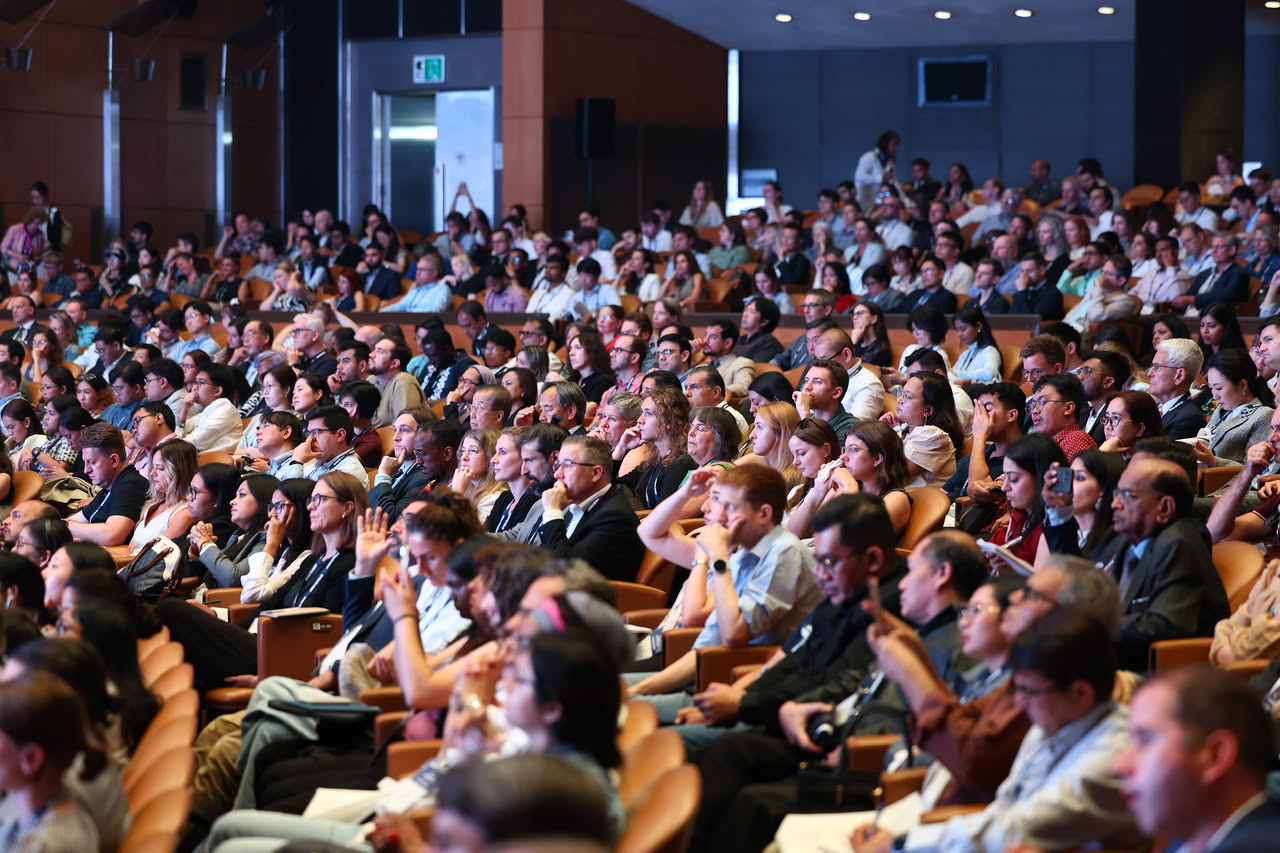
IPSA was represented by a strong delegation at the 2025 APSA Annual Meeting, held in Vancouver, Canada, from 11 to 14 September 2025. The delegation included IPSA President Yuko Kasuya, Past Presidents Dianne Pinderhughes and Marianne Kneuer, several Executive Committee members, and Executive Director Kim Fontaine-Skronski. The IPSA delegation participated in academic sessions and held official meetings during the event. |
|
|
THE 2025 CONGRESS OF THE TURKISH POLITICAL SCIENCE ASSOCIATION |
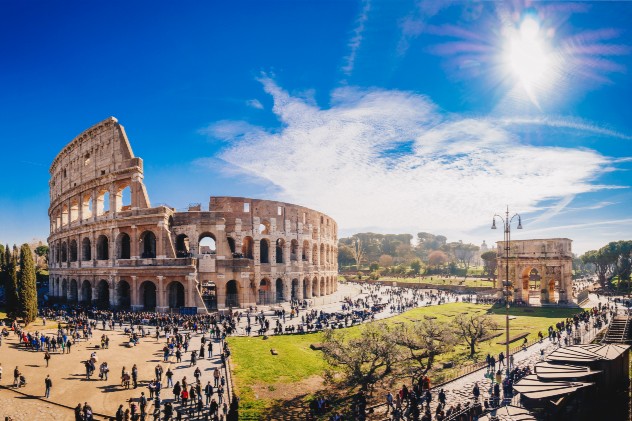
The Turkish Political Science Association’s (SITD) 2025 National Congress was held at Izmir University of Economics, Türkiye, from 20 to 21 September 2025. IPSA President-Elect Hasret Dikici Bilgin and Executive Committee member Berk Esen served on the Organizing Committee for this event. They took the opportunity to promote the upcoming 2027 IPSA World Congress of Political Science in Rome. |
| THE 2025 ITALIAN POLITICAL SCIENCE ASSOCIATION CONFERENCE |
The 2025 Italian Political Science Association (SISP) Conference was held in Naples, Italy, from 4 to 6 September 2025. The SISP General Assembly featured a video message from IPSA President Yuko Kasuya. Also on hand to represent IPSA were Past President Pablo Oñate, IPSAMOOC Coordinator Mauro Calise, Executive Committee member Fortunato Musella, and WC2027 Program Co-Chair Francesca Longo. |
|
|
IPSA CELEBRATES WORLD SCIENCE DAY WITH SPECIAL EVENTS |
|
|
WEBINAR ON PREDATORY JOURNALS AND THE NEW IPSA PREDATION INDEX |
IPSA will host a webinar titled The Predation Index: A Tool to Discover Predatory Journals on 10 November 2025. In this session, International Political Science Review Co-Editors Daniel Stockemer and Annika Hinze will discuss the issue of predatory journals and introduce the IPSA Predation Index, a new online tool designed to help political science researchers identify potentially predatory publications. The Predation Index is available on the IPSA website.
|
| ROUNDTABLE ON POLITICAL FINANCE AND CORRUPTION |
The IPSA Research Committee on Political Finance and Political Corruption (RC20) will host a virtual roundtable titled Corruption Research at a Crossroads: Conceptual, Data, and Measurement Challenges and Solutions on 10 November. The roundtable will bring together leading scholars and practitioners to address the persistent methodological and data challenges inherent in corruption research. |
|
|
| CONGRATULATIONS TO THE WINNERS OF THE
WC2025 SATISFACTION SURVEY |
We are delighted to announce that the following participants in the WC2025 Satisfaction Survey have won free registration for the #IPSA2027 World Congress in Rome: Carlos De la Torre, Galyna Zelenko, Keisha Shaneika Mei Pandapatan, Min Kim and Sympathy Devi Ningombam. |
|
|
JOHN ISHIYAMA DELIVERS KEYNOTE AT UNAM
|
IPSA Executive Committee member John Ishiyama will deliver a keynote address at the National Autonomous University of Mexico on 30 October 2025. His lecture, titled “Whither Political Science in an Uncertain World? Challenges, Trends, and Opportunities,” will discuss the importance of political science education in addressing the challenges to democracy and how educators can better prepare students to navigate the revolutionary changes in the information environment brought about by artificial intelligence.
|
|
THE 2025 DAVID M. OLSON AWARD RECIPIENTS ANNOUNCED |
The IPSA Research Committee on Legislative Specialists (RC08) is pleased to announce that the 2025 David M. Olson Award for the Best Paper in Legislative Studies has been awarded to Haakon Gjerløw, Anton Kronborg and Øyvind Stiansen for their paper, Debating Threats to Authoritarian Rule: Inclusion and Discrimination in the Legislative Council of Northern Rhodesia, which was presented at the 2025 IPSA World Congress in Seoul. |
|
|
1) The Academic Freedom Index (AFI) is an annual global assessment developed by V-Dem (University of Gothenburg) and Friedrich-Alexander University, based on input from more than 2,000 experts and over one million evaluations. Using five indicators – research and teaching freedom, knowledge exchange, institutional autonomy, campus integrity, and academic expression – the 2025 AFI reports a decline in 36 countries and improvement in only eight (e.g., Bahrain, Fiji, Montenegro, Seychelles). The decline is linked to anti-pluralist parties in power. Argentina shows new setbacks under Javier Milei, while Poland has improved since its 2023 government change, and the U.S. faces worsening long-term deterioration in the wake of Trump’s re-election in 2024. The project offers open-access data available through interactive maps on Our World in Data. (Research Institutes on the IPSAPortal).
2) Scholars at Risk (SAR) is an international network established in 1999 to protect threatened scholars and promote academic freedom. SAR has since expanded across Europe, North America, Africa, and the Middle East. Today, SAR’s membership includes hundreds of institutions and regional coalitions focused on three key areas: protecting scholars, advocating for academic freedom, and conducting research and learning activities. These activities involve hosting scholars, monitoring violations, defending imprisoned academics and providing training on university values. SAR publishes the annual Free to Think Report documenting attacks on academic freedom as part of the Academic Freedom Monitoring Project, and it runs the Free to Think Podcast. (Thematic Networks on the IPSAPortal).
3) In recent years, leading international political science associations have shown a greater commitment to promoting debate and bringing a sustained focus to bear on academic freedom within the most prominent forums as part of an effort to strengthen international dialogue and collaboration. IPSA published an Academic Freedom Report, followed by Guidelines on Academic Freedom Policy. The European Council of Political Research (ECPR) has set up a working group on academic freedom and launched the Loop blog. This year, the American Political Science Association (APSA) and other political science associations signed a joint statement affirming their support for freedom of research and teaching, and opposing external interference, federal funding cuts, and threats to freedom of access to data. (Associations on the IPSAPortal).
|
|
|
International Political Science Association | Montreal, Canada ipsa.org |
|
|
|