If you can't see this newsletter properly, please click here |
|
|
IPSA NEWSLETTER – September 2025 |
|
|
SOUTH KOREAN LEADERS HIGHLIGHT DEMOCRACY AT
RECORD-BREAKING 2025 IPSA WORLD CONGRESS
|
The 2025 IPSA World Congress of Political Science was held in Seoul, South Korea, from 12 to 16 July 2025. IPSA’s flagship event drew a record-breaking 3,450 attendees, with women accounting for 44% of Congress participants. Delegates from 95 countries presented 3,059 papers in 776 panels. Beyond its academic success, the 2025 World Congress will be remembered for the high-profile participation of distinguished South Korean leaders, among them President Lee Jae Myung (photo above), Prime Minister Kim Minseok, former UN Secretary-General Ban Ki-moon, and National Assembly Speaker Woo Won-shik.
|
|
|
YUKO KASUYA ASSUMES IPSA PRESIDENCY, AND
HASRET DIKICI BILGIN NAMED PRESIDENT-ELECT
|
Yuko Kasuya (Japan), elected President-Elect by the IPSA Council in 2023, officially assumed the role of IPSA President on 15 July, following the election of President-Elect Hasret Dikici Bilgin (Türkiye) at the 2025 IPSA World Congress of Political Science in Seoul. The IPSA Council, the Association’s highest decision-making body, elected Hasret Dikici Bilgin to serve a two-year term as President-Elect. She will take over as President at the 2027 IPSA World Congress in Rome, Italy.
|
|
|
IPSA COUNCIL ELECTED THE 28th EXECUTIVE COMMITTEE |
Our warm congratulations go out to the 16 members of the 28th Executive Committee (EC), elected by acclamation at the IPSA World Congress of Political Science in Seoul on 16 July 2025. The new EC will govern IPSA during the 2025–2027 term. Their collective expertise, vision, and dedication to the advancement of political science will help spur IPSA’s continued growth and innovation. |
|
|
AZUL A. AGUIAR AGUILAR APPOINTED SUMMER SCHOOL COORDINATOR |
Azul A. Aguiar Aguilar has been appointed IPSA Summer Schools Coordinator at the first meeting of the 28th IPSA Executive Committee in Seoul on 16 July 2025. Prof. Aguiar Aguilar will serve a renewable two-year term and oversee the overall coordination of IPSA’s Summer School program. |
| CARMELO CATTAFI RE-ELECTED AS RC-EC LIAISON |
Carmelo Cattafi has been re-elected as the Research Committee–Executive Committee (RC-EC) Liaison. He was re-elected by the RC Chairs during the meeting of the Advisory Commission on Research (ACR), held in conjunction with the IPSA World Congress of Political Science on 16 July 2025. |
|
|
IPSA’S BIENNIAL REPORT
2024-2025 RELEASED |
IPSA released its Biennial Report 2024-2025, offering a comprehensive overview of the Association's significant achievements, expanding global reach, and strategic initiatives over the past two years. During this reporting period, two international conferences were held to mark IPSA's 75th anniversary in 2024. The IPSA Biennial Report can be downloaded in PDF format (see below). We encourage you to read it and share it with your colleagues. |
| IPSA’S GENDER INEQUALITIES IN POLITICAL SCIENCE SURVEY REPORT NOW AVAILABLE |
IPSA released a survey report titled Gender Inequalities in Political Science at the 2025 IPSA World Congress in Seoul. Conducted among individual members and members of affiliated national associations worldwide, the survey aimed to understand perceptions and experiences of working conditions, inappropriate behaviours, and gender inequalities in the field. |
|
|
IPSA AT THE 2025 ECPR GENERAL CONFERENCE |
IPSA was present at the 2025 ECPR General Conference held in Thessaloniki, Greece, from 26–29 August 2025. Former IPSA Executive Committee member Emilia Palonen chaired the IPSA roundtable Resisting Autocratization in Polarised Societies on Thursday, 28 August 2025. IPSA also hosted a virtual exhibition booth at the ECPR General Conference. |
| FRANCESCO KJELLBERG AWARD NOMINATION DEADLINE APPROACHING |
Deadline: 30 September 2025 |
Panel convenors and chairs are invited to nominate outstanding papers presented by new scholars at the 2025 IPSA World Congress of Political Science for the Francesco Kjellberg Award for Outstanding Papers Presented by New Scholars. Panel convenors and chairs can submit nominations by completing the online nomination form by 30 September 2025.
|
|
|
IPSA RENEWS PUBLISHING PARTNERSHIP WITH SAGE |
IPSA has renewed its publishing partnership with Sage for the International Political Science Review (IPSR) and the addition of Governance Review to its journal portfolio. The Memorandum of Understanding (MoU) was signed during the IPSR–Sage Reception on 15 July 2025, held as part of the IPSA World Congress of Political Science in Seoul. | | WORLD CONGRESS PARTICIPANTS FROM QUÉBEC MEET THE QUÉBEC DELEGATION IN SEOUL |
Participants from Québec, Canada, attending the 2025 IPSA World Congress of Political Science, met with members of the Québec Delegation in Seoul, along with IPSA Executive Director Kim Fontaine-Skronski and IPSA Executive Committee member Serge Granger. Representing the Québec Delegation were Damien Pereira, Québec Delegate in Seoul, and Kevin Drouin, Trade Attaché. |
|
|
HIGHLIGHTS OF THE 2025 IPSA-CONCORDIA
SUMMER INSTITUTE IN APPLIED DIPLOMACY |
The 2025 edition of the IPSA-Concordia Summer Institute in Applied Diplomacy was held in a hybrid format in Montréal and virtually from 18 to 28 August 2025. The Summer Institute featured a keynote address by H.E. Andreas Rendl, Ambassador of Austria to Canada, who delivered a lecture titled Diplomacy in the Digital Age – Still Needed? |
|
|
PREDATORY PUBLISHING QUESTIONNAIRE: A PRACTICAL TOOL FOR POLITICAL SCIENCE RESEARCHERS |
IPSA launched The Predatory Publishing Questionnaire, a new online tool to help political science researchers identify potentially predatory journals, during the special session Publishing and Ethics in Research: What’s Up? at the 2025 IPSA World Congress. |
| NEW ISSUE OF IPSR PUBLISHED (SEPTEMBER 2025) |
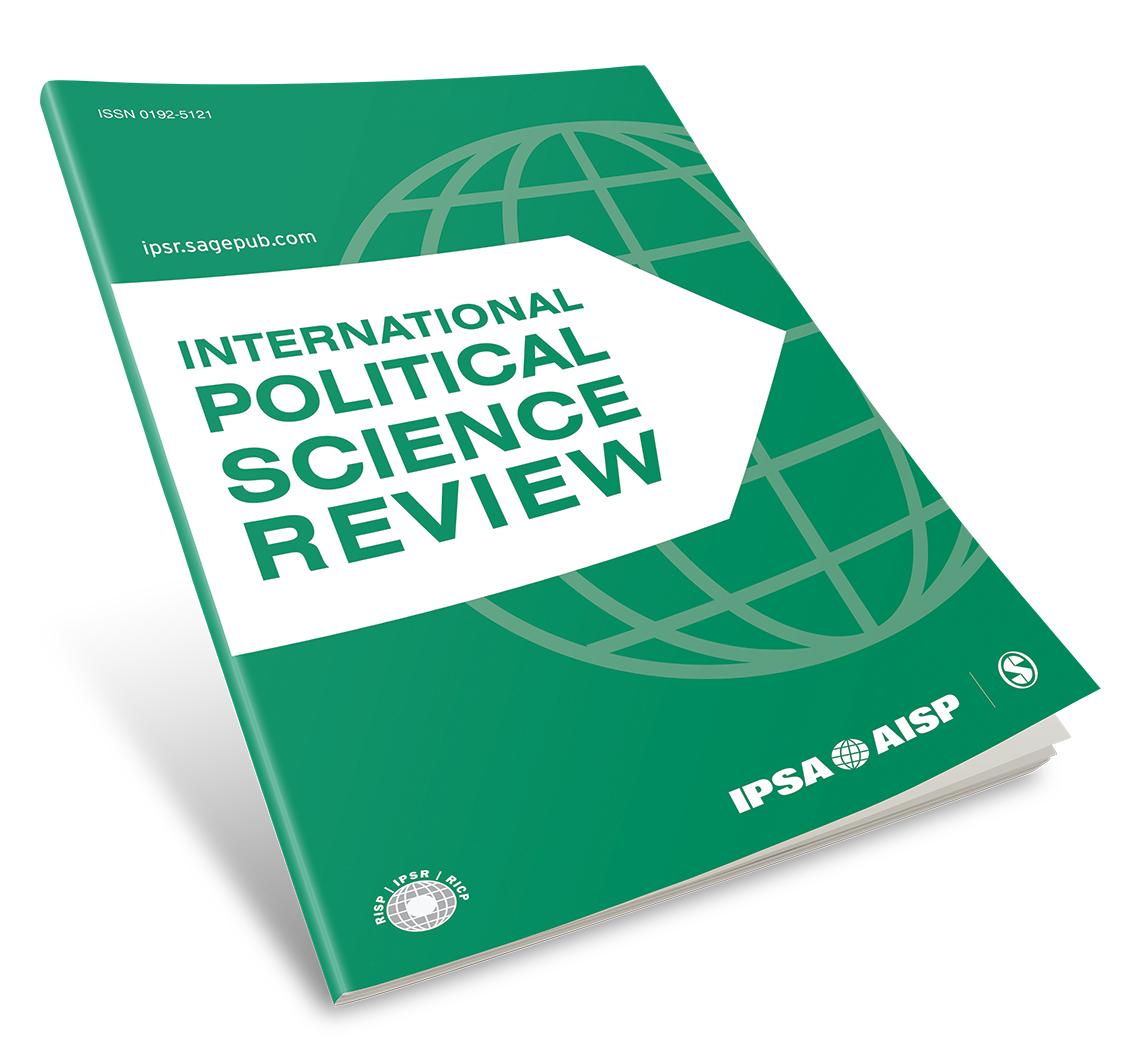
The latest issue of the International Political Science Review (IPSR) (Volume 46, Number 4, September 2025) features articles on a range of current conceptual and empirical issues in comparative and international politics. |
|
|
1) The OECD Digital Government Index (DGI) assesses how governments use technology and data to modernize the public sector, with a focus on six key areas, including digital-by-design and user-driven services. It is complemented by the Going Digital Toolkit, which enables countries to evaluate their digital progress through data visualization and adaptable policy guidance. Grounded in a seven-dimension framework – from infrastructure access to digital trust – the Toolkit promotes inclusive digital economies and coherent policymaking. Together, the DGI and Toolkit guide strategic and people-centered digital transformation, supporting the development of resilient, future-ready public systems (Research Institutes on the IPSAPortal).
2) The AI Index 2025, published by Stanford University’s Human-Centered Artificial Intelligence Center, provides policymakers, researchers, and the public with a comprehensive overview of global artificial intelligence trends, complete with data-driven insights. The 2025 edition focuses on the accelerating development of generative AI, with industry now leading the way in creating advanced models ahead of academia. Significant growth is evident in key areas, such as AI adoption in education, job market changes, and scientific output. The report also raises concerns, however; these include fragmented ethical AI practices, scarce emissions reporting in spite of rising carbon impacts, and inadequate global AI governance. While landmark regulatory initiatives such as the EU AI Act and the US Executive Order mark important progress, the report stresses the need for greater coordination (Thematic Networks on the IPSAPortal).
3) From 2014 to 2022, the Digital Economy and Society Index (DESI) tracked digital progress in EU member states. Since 2023, it has been integrated into the State of the Digital Decade report to better align with the EU’s 2030 targets. The 2025 edition focuses on four key areas: digital skills, infrastructure, business digitalization, and public services. It highlights advances in AI, 5G, and e-government, but warns of persistent gaps in skills and connectivity, as well as strategic dependencies in cloud computing, semiconductors, and cybersecurity. Rising energy demands and societal risks, including those posed by misinformation and child safety, add further urgency. With 2025 marking the halfway point, intensified efforts are needed to secure Europe’s digital future (Statistical and Data Archives on the IPSAPortal).
|
|
|
International Political Science Association | Montreal, Canada ipsa.org |
|
|
|