If you can't see this newsletter properly, please click here
|
|
|
|
IPSA NEWSLETTER – June 2026 |
|
|
|
REGISTRATION OPEN FOR IPSA’S
REGIONAL CONFERENCE IN WROCŁAW |
Registration is now open for IPSA’s Regional Conference on the theme Resilience of Democracy in a Polarized World: Populism, Autocratization, and Global Challenges. This three-day conference will be held at the University of Wrocław in Poland, from 14-16 October 2026. Register by 5 August 2026 to be included in the conference program. |
|
|
|
THE 2027 IPSA WORLD CONGRESS WEBSITE NOW ONLINE! |
The website for the 29th IPSA World Congress of Political Science is now online! The Congress website, wc2027.ipsa.org, provides information on the theme and program, important deadlines, registration fees, venue details, visa requirements, and practical information for participants. The #IPSA2027 World Congress will be held at Luiss Guido Carli in Rome, Italy, from 24-28 July 2027, as a fully in-person event.
|
IPSA MARKS 20 YEARS OF ITS PERMANENT SECRETARIAT IN CANADA WITH EVENTS IN MONTRÉAL AND OTTAWA |
|
|
|
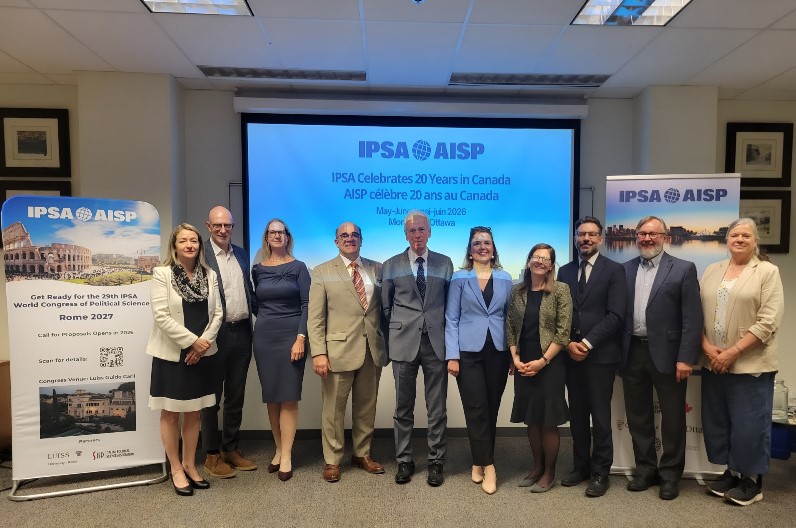
IPSA is proud to celebrate the 20th anniversary of its Permanent Secretariat in Montréal, Canada, marking two decades of scholarly contribution and engagement within the global political science community. On this occasion, IPSA presented a series of events in Montréal and Ottawa in May and June 2026. The 20th anniversary activities were organized with support from the Konrad-Adenauer Foundation (KAS) Canada and in collaboration with Concordia University, the University of Ottawa, the Canadian Political Science Association (CPSA), and the Société québécoise de science politique (SQSP).
|
|
|
|
CALL FOR IPSA PRESIDENT-ELECT |
In accordance with its Rules and Procedures, IPSA invites applications for the position of President-Elect. If elected, the candidate will serve a two-year mandate as President-Elect from 2027 to 2029 and, subsequently, as President from 2029 to 2031. For a detailed description of the role and responsibilities of the IPSA President, please refer to Article 17 of the IPSA Constitution.
|
|
|
|
NEW ISSUE OF IPSR PUBLISHED (JUNE 2026) |
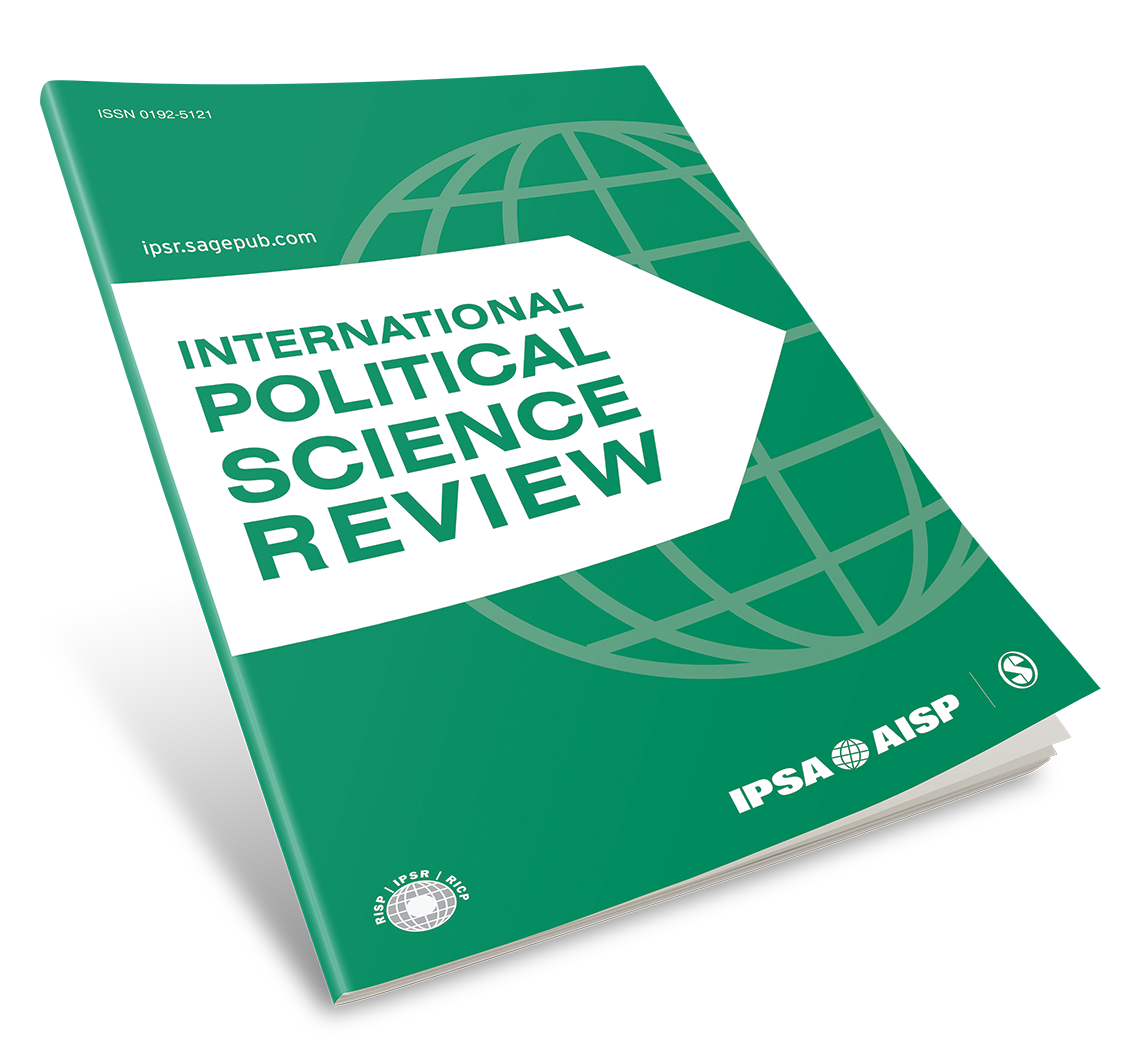
The June 2026 issue of the International Political Science Review (volume 47, number 3) has been published. The new issue addresses a wide range of timely political issues across the world. IPSA members can access all issues of the journal, including the IPSR archive dating back to 1980, through the My IPSA menu. |
|
|
CALL FOR PAPERS:
TRENDS IN POLITICAL SCIENCE
Deadline: 13 July 2026
|
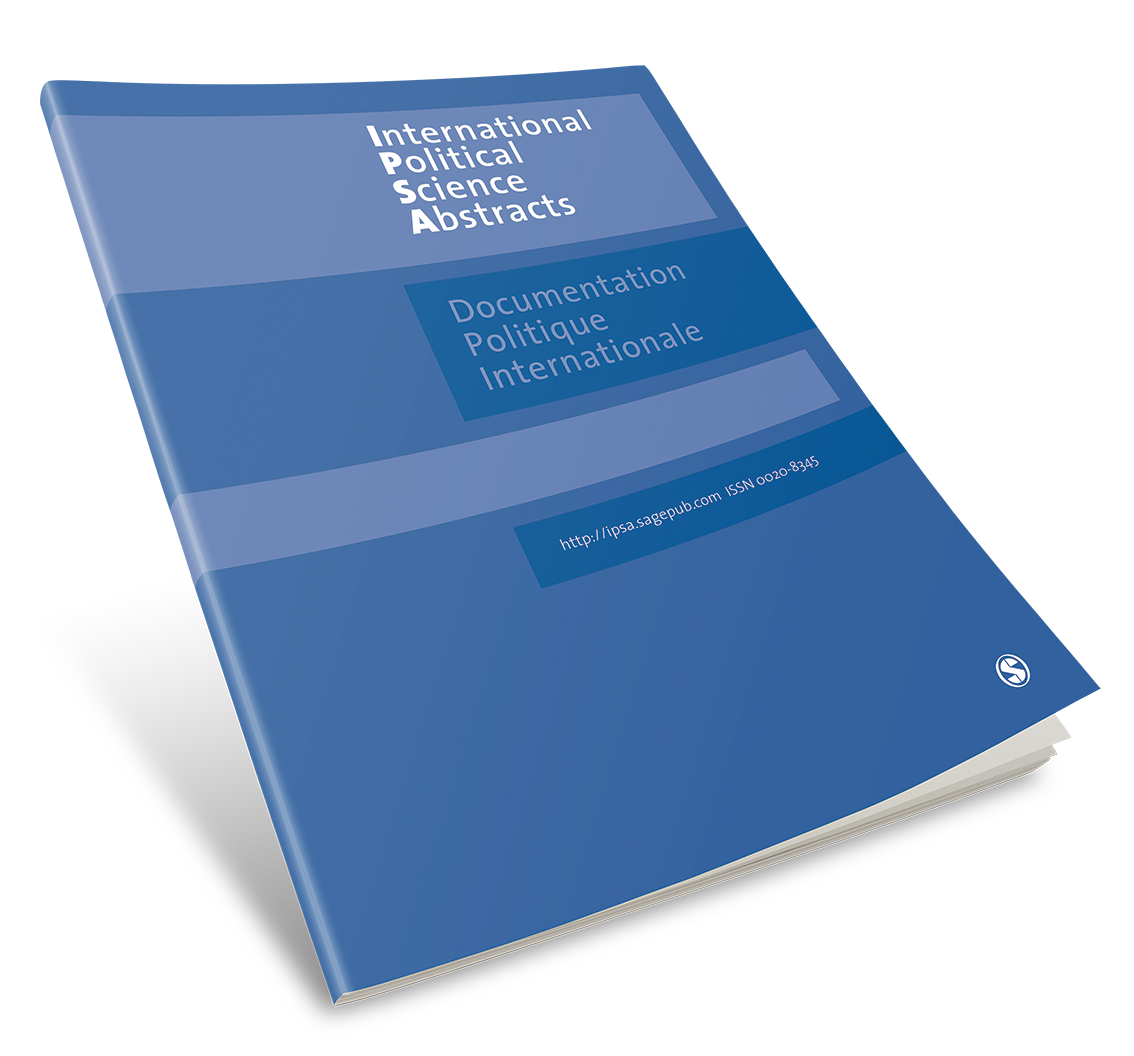
The International Political Science Abstracts seeks authors for the journal's Trends in International Political Science rubric. We are currently soliciting authors to write articles on the following subjects: misinformation, regime survival, AI and election campaigns, EU and geopolitics, and polarization. |
|
|
|
2026 IPSA-ANTALYA SUMMER SCHOOL FOR SOCIAL SCIENCE RESEARCH METHODS |
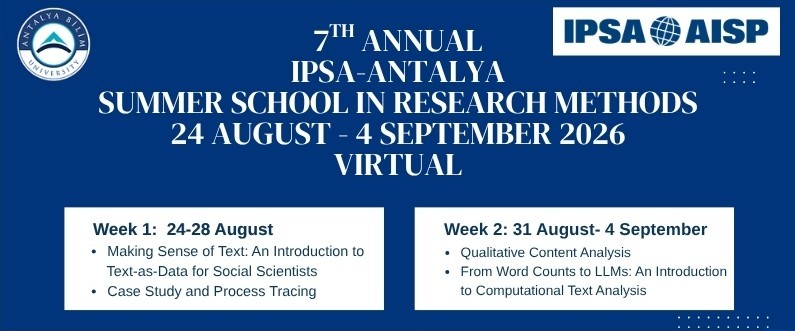
The 7th edition of the IPSA-ABU Summer School for Social Science Research Methods will be held virtually from 24 August to 4 September 2026. Designed for graduate students, academics, and professionals, the Antalya Summer School offers a unique opportunity to deepen your methodological expertise, sharpen your analytical skills, and expand your network in the field.
|
|
| 2026 IPSA-PPSA SUMMER SCHOOL: TRANSFORMING POLITICS AND MEDIA IN THE AGE OF ARTIFICIAL INTELLIGENCE |
The first edition of the IPSA-PPSA Summer School: Transforming Politics and Media in the Age of Artificial Intelligence will be held from 14 to 19 September 2026 in Poznań, Poland. The program offers a series of workshops, each related to one of the cutting-edge techniques in political and communication research. |
|
| 2026 IPSA-AECPA SUMMER SCHOOL IN METHODS AND TECHNIQUES IN POLITICAL SCIENCE
|
The 3rd edition of the IPSA-AECPA Summer School in Methods and Techniques in Political Science will be held at the University of Santiago de Compostela, Spain, from 23 September to 2 October 2026. Detailed information will be available on the Summer School website shortly. |
|
|
|
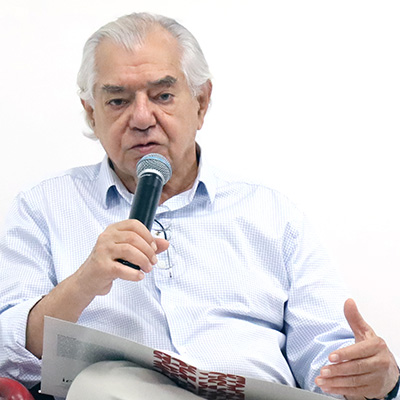
JOSÉ ALVARO MOISÉS IN MEMORIAM (1945-2026) |
The IPSA family is deeply saddened by the passing of José Álvaro Moisés at the age of 81. On behalf of IPSA and the global political science community, we extend our heartfelt condolences to his family, colleagues and loved ones. Prof. Moisés served on the IPSA Executive Committee (EC) for two terms (2009-2012 and 2012-2014). He also co-founded the IPSA Research Committee on Quality of Democracy (RC34) with Marianne Kneuer in 2012. |
|
| |
|
1) The Freedom in the World 2026 report by Freedom House details the nineteenth consecutive year of global freedom decline: Out of the 195 countries assessed, 60 registered score declines, compared with 34 countries reporting improvements. Restrictions on opposition parties, independent media and civil society remained the main drivers of democratic backsliding, while digital surveillance and online censorship expanded in multiple regions. The accompanying country scores and historical data enable comparative analysis of democratic backsliding, political rights, and civil liberties across regions (Research Institutes on the IPSAPortal).
2) The Armed Conflict Survey 2026 (IISS) combines regional assessments, conflict profiles, and maps covering active conflicts worldwide. The latest edition identifies Sudan, Ukraine, Myanmar, and the Middle East as key conflict theatres, citing the growing use of drones, precision-strike systems and external military support. It also documents increasing displacement and humanitarian pressures, alongside the growing role of non-state armed groups in shaping conflict dynamics (Special Collections on the IPSAPortal).
3) The Climate Change Performance Index 2026 evaluates the performance of countries responsible for more than 90% of global greenhouse gas emissions and includes rankings and country assessments. As in previous editions, no country achieved a “Very High” rating, leaving the top three positions vacant. Denmark remained the highest-ranked performer, while China and the United States continued to rank in the lower half of the index despite their central role in global climate policy (Thematic Sites on the IPSAPortal).
4) The Power Reactor Information System (PRIS) provides official IAEA data on civilian nuclear power reactors, including reactor profiles, operational histories and country statistics. Current global statistics record about 440 operational reactors across 32 countries, generating roughly 9% of global electricity, while more than 60 reactors are under construction worldwide. The data point to renewed investment in nuclear energy, particularly in Asia, along with growing use of lifetime-extension programmes in Europe and North America (Special Collections on the IPSAPortal).
|
|
|
|
International Political Science Association | Montreal, Canada ipsa.org |
|
|
|
|