If you can't see this newsletter properly, please click here
|
|
|
|
IPSA NEWSLETTER – October 2026 |
|
|
| IPSA REGIONAL CONFERENCE IN WROCŁAW BRINGS
TOGETHER SCHOLARS FROM MORE THAN 50 COUNTRIES
|
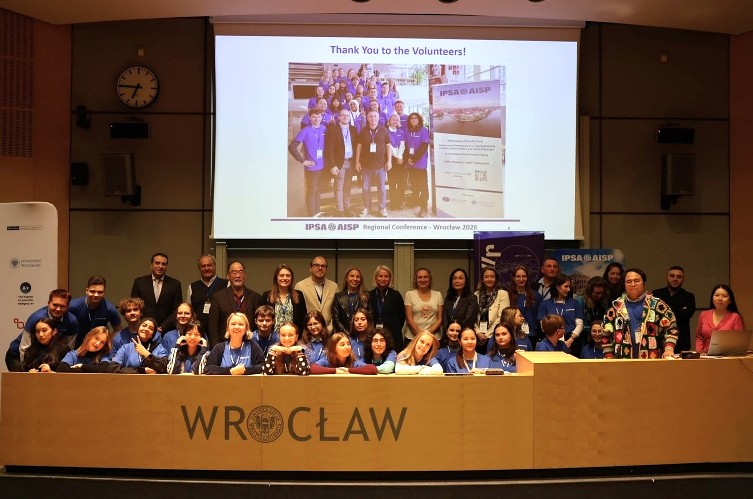
IPSA held a regional conference on the theme Resilience of Democracy in a Polarized World: Populism, Autocratization and Global Challenges in Wrocław, Poland, from 14 to 16 October 2026. The successful three-day event, held in collaboration with the Polish Political Science Association (PTNP) and the Faculty of Social Sciences at the University of Wrocław, with support from the Municipality of Wrocław, brought together 372 scholars from 52 countries for broad-ranging discussion on topics related to democracy, polarization and autocratization. During the event, 300 papers were presented across 87 panels and three roundtables. Manuela Caiani, Associate Professor, Scuola Normale Superiore, delivered a keynote presentation to conference delegates titled Dynamics of Far-Right Transnationalization in Europe.
|
|
|
|
IPSA HOLDS ITS 152nd EXECUTIVE COMMITTEE MEETING IN WROCŁAW
|
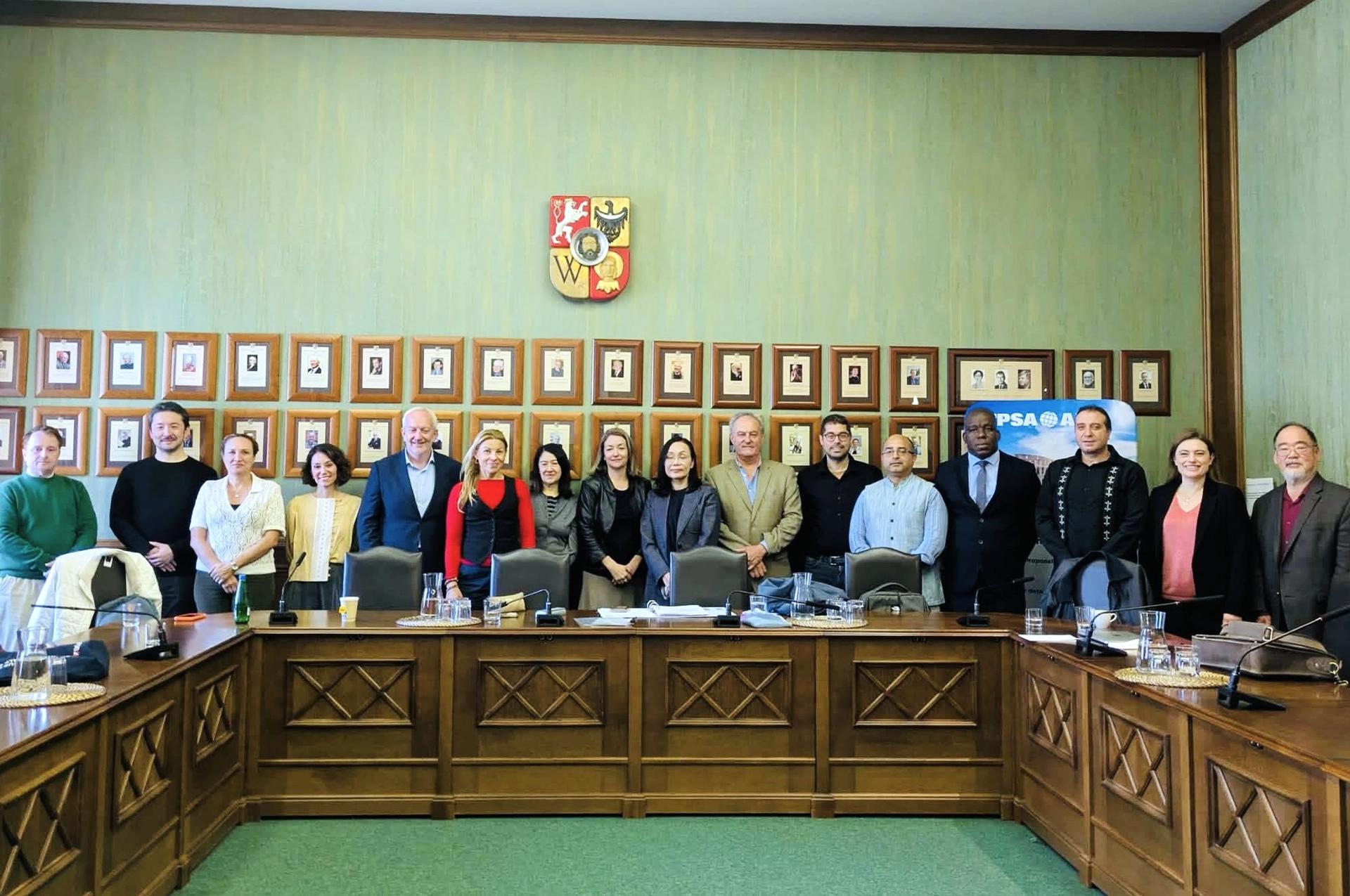
The 152nd IPSA Executive Committee (EC) Meeting was held in Wrocław from 17-18 October 2026, on the heels of IPSA’s Regional Conference on the Resilience of Democracy in a Polarized World. IPSA extends its heartfelt gratitude to the Polish Political Science Association and the Municipal Office of Wrocław, Academic Center Hub, for their kind support and hospitality. The Wrocław EC meeting provided a platform for IPSA leadership, EC members, and the IPSA Secretariat to meet and discuss preparations for the upcoming World Congress of Political Science, which takes place in Rome from 24-28 July 2027.
|
|
|
|
SUBMIT YOUR PAPER AND CLOSED PANEL PROPOSALS
BY 4 NOVEMBER |
The submission deadline is fast approaching! Submit a paper or closed panel proposal for the 29th IPSA World Congress in Rome by 4 November 2026. Submit an open or closed panel proposal on any topic in political science, including the Congress theme, Uncertain Democracies: Rethinking Governance in a Changing Global System. |
|
| NOMINATIONS FOR THREE 2027 IPSA AWARDS CLOSE
ON 1 NOVEMBER |
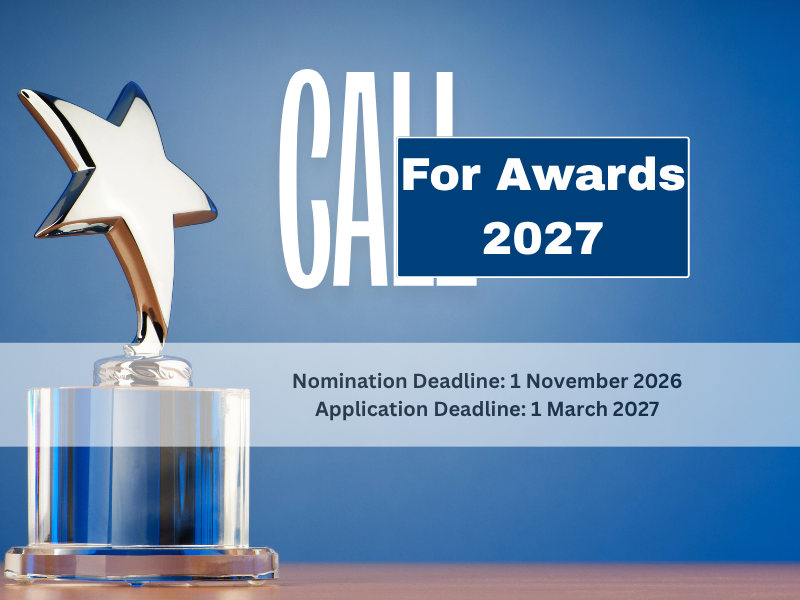
The nomination deadline for three 2027 IPSA Awards is drawing closer! IPSA members are invited to submit nominations before 1 November 2026 for the Kim Dae-jung Award, the Prize of the Foundation Mattei Dogan and the Karl Deutsch Award. Individual applications for the IPSA Guillermo O’Donnell Award for Latin American Scholars, the Margaret A. Vogt Award for Global South Scholars, and the Stein Rokkan Travel Grant Award must be submitted by 1 March 2027. |
|
|
|
IPSA AND ALACIP LAUNCH THE ALACIP-IPSA CAFÉ SERIES
|
IPSA and the Latin American Political Science Association (ALACIP) are launching the ALACIP-IPSA Café Series, a joint initiative bringing together political scientists to discuss contemporary political challenges in Latin America. The series reflects the collaboration between the two associations and their Research Committees (RCs). The first session, titled Human Rights, Inequalities, and Emerging Minorities, will be held online on 23 October 2026. |
|
| |
|
IPSA AND AAPS HOLD THEIR FIRST AFRICA ONLINE WORKSHOP SERIES |
Co-organized by IPSA and the African Association of Political Science (AAPS) with support from the Nippon Foundation, the inaugural Africa Online Workshop Series (AOWS) was successfully held from 1-3 September 2026. The 12-hour program brought together 17 early-career scholars and graduate students from Africa-based institutions, operating across two parallel linguistic tracks (English and French). |
|
| IPSA’S WORK-IN-PROGRESS SESSIONS (WIPS) SURVEY CONCLUDES |
We extend our sincere thanks to everyone who completed the IPSA Work-in-Progress Sessions (WiPS) survey. We are pleased to announce that Laura Valencia Escamilla, Professor at the Metropolitan Autonomous University in Mexico and a member of the IPSA Research Committee on Democratization in Comparative Perspective (RC13), is the winner of the survey draw. Prof. Valencia Escamilla will receive a 50% discount on IPSA membership fees for a future membership registration. |
|
|
|
IPSA AT THE 2026 APSA ANNUAL MEETING IN BOSTON |
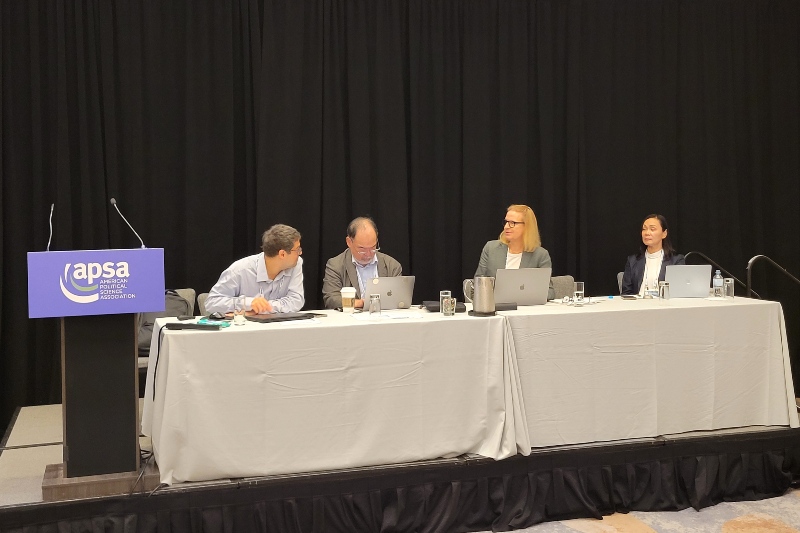
The American Political Science Association’s (APSA) 122nd Annual Meeting took place in Boston, USA, from 3-6 September 2026. IPSA was once again represented by a strong delegation, including President Yuko Kasuya; IPSA Past Presidents Dianne Pinderhughes and Marianne Kneuer; IPSA Executive Committee (EC) members Elisa Chelle, Berk Esen, Min Hee Go, John Ishiyama, André Lecours, and Kenneth McElwain; IPSA Summer Schools Coordinator Azul A. Aguiar Aguilar; former IPSA Vice-President Rodney Hero; and IPSA Executive Director Kim Fontaine-Skronski.
|
|
| IPSA AT THE 2026 ECPR GENERAL CONFERENCE IN KRAKÓW |
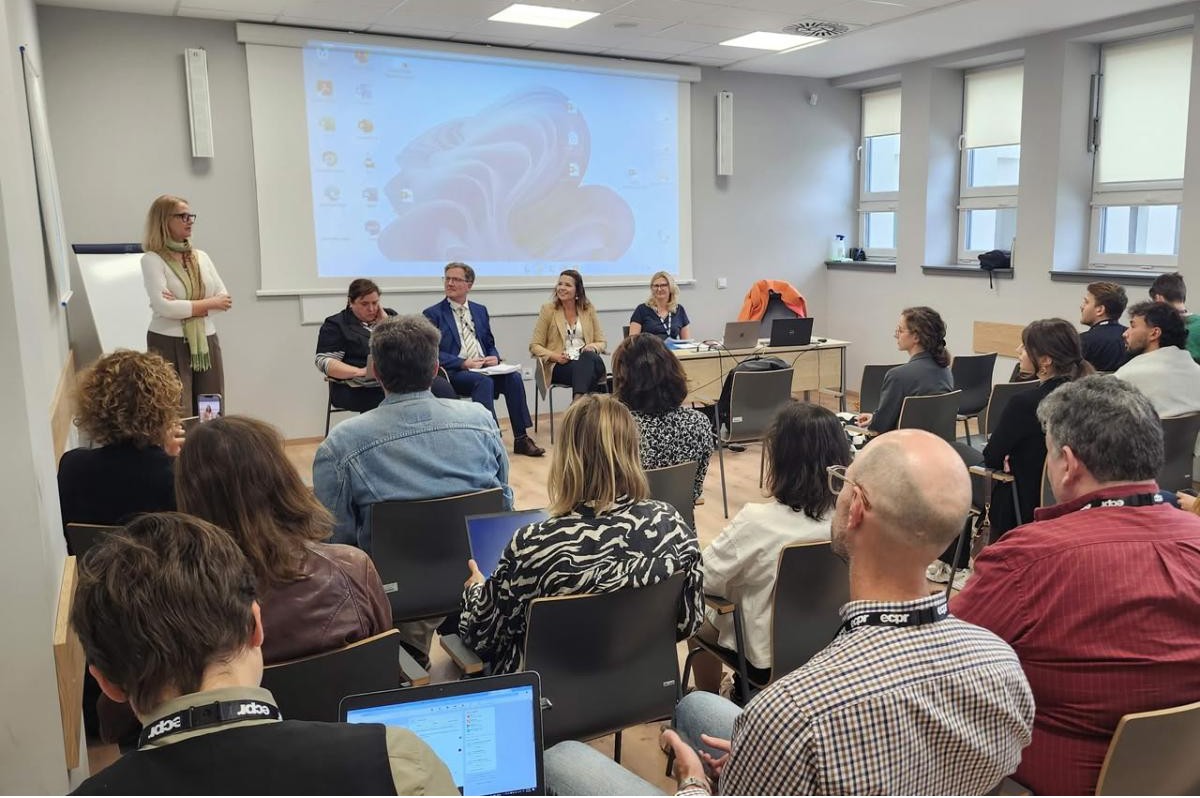
IPSA was present at the 2026 General Conference of the European Consortium for Political Research (ECPR), a prestigious global event that was held in Kraków, Poland, from 8-11 September 2026. IPSA was represented by Ferdinand Müller-Rommel (IPSA Vice-President), Marianne Kneuer (IPSA Past President), and Mathieu St-Laurent (Senior Director - Membership, Research and Strategy). |
|
|
|
IPSA AT THE 2026 AMECIP CONGRESS IN AGUASCALIENTES
|
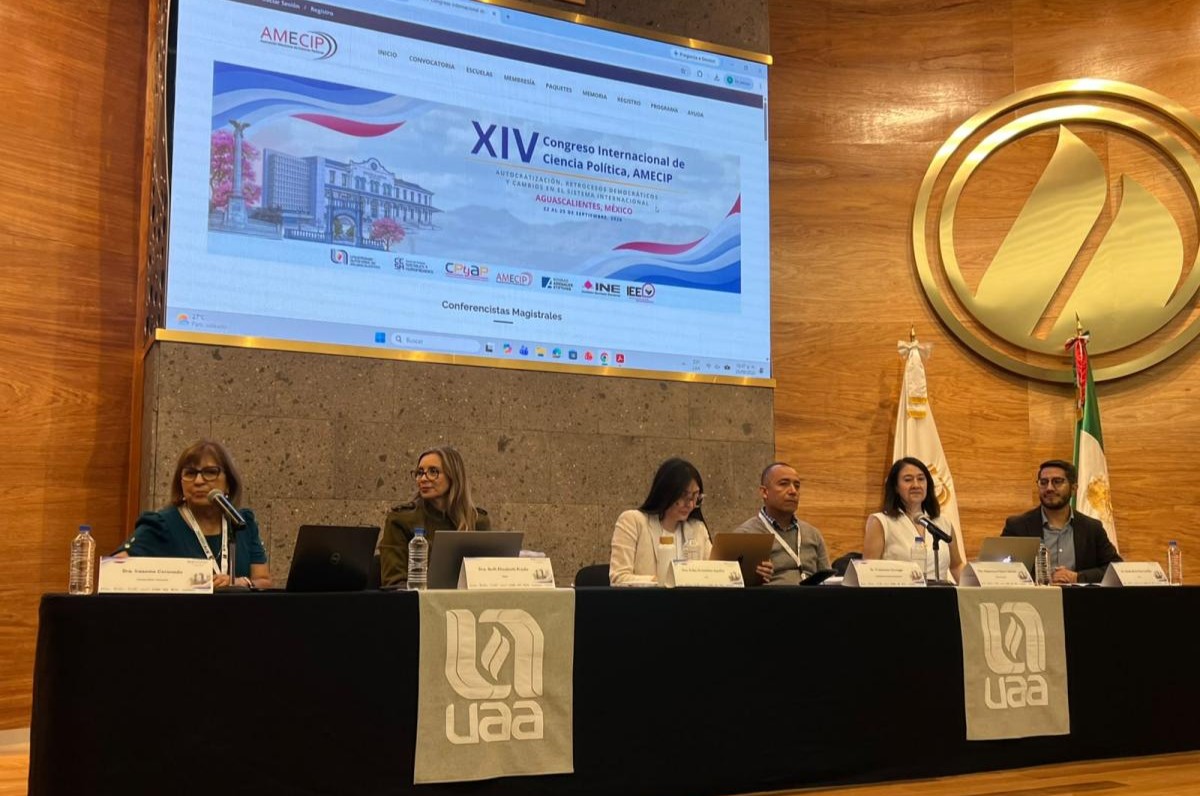
IPSA was represented at the 14th International Congress of Political Science, organized by the Mexican Political Science Association on 22-25 September 2026 in Aguascalientes, Mexico. Esperanza Palma (EC Member), Azul A. Aguiar Aguilar (IPSA Summer Schools Coordinator and AMECIP President), Carmelo Cattafi (IPSA RC-EC Liaison), Irasema Coronado (former IPSA Vice-President), and Gabriela Ippolito-O'Donnell (Chair of RC54 - Latin American Politics) participated in several panels. |
|
|
IPSA AT CEPSA’S 30th ANNUAL CONFERENCE IN PILSEN |
The 30th Annual Conference of the Central European Political Science Association (CEPSA) was held on 24-25 September at the University of West Bohemia in Pilsen, Czechia. IPSA Vice-President Ferdinand Müller-Rommel represented IPSA at the conference and delivered remarks at the opening ceremony. |
|
|
|
MARKING UNITED NATIONS DAY: NEW RESEARCH ON DEMOCRATIC EROSION BY IPSA PAST PRESIDENT MARIANNE KNEUER
|
To mark United Nations Day on 24 October, IPSA highlights research by Past President Marianne Kneuer (2018-2021) on democratic erosion and its international implications. Building on her contribution to IPSA’s 2022 open-access book, Does the UN Model Still Work? Challenges and Prospects for the Future of Multilateralism, Prof. Kneuer published an article in the journal Democratization titled Democratic Erosion and its International Implications: How Governments in Eroding Democracies Shift their Foreign Policy Behaviour.
|
|
|
NEW ISSUE OF IPSR PUBLISHED (SEPTEMBER 2026) |
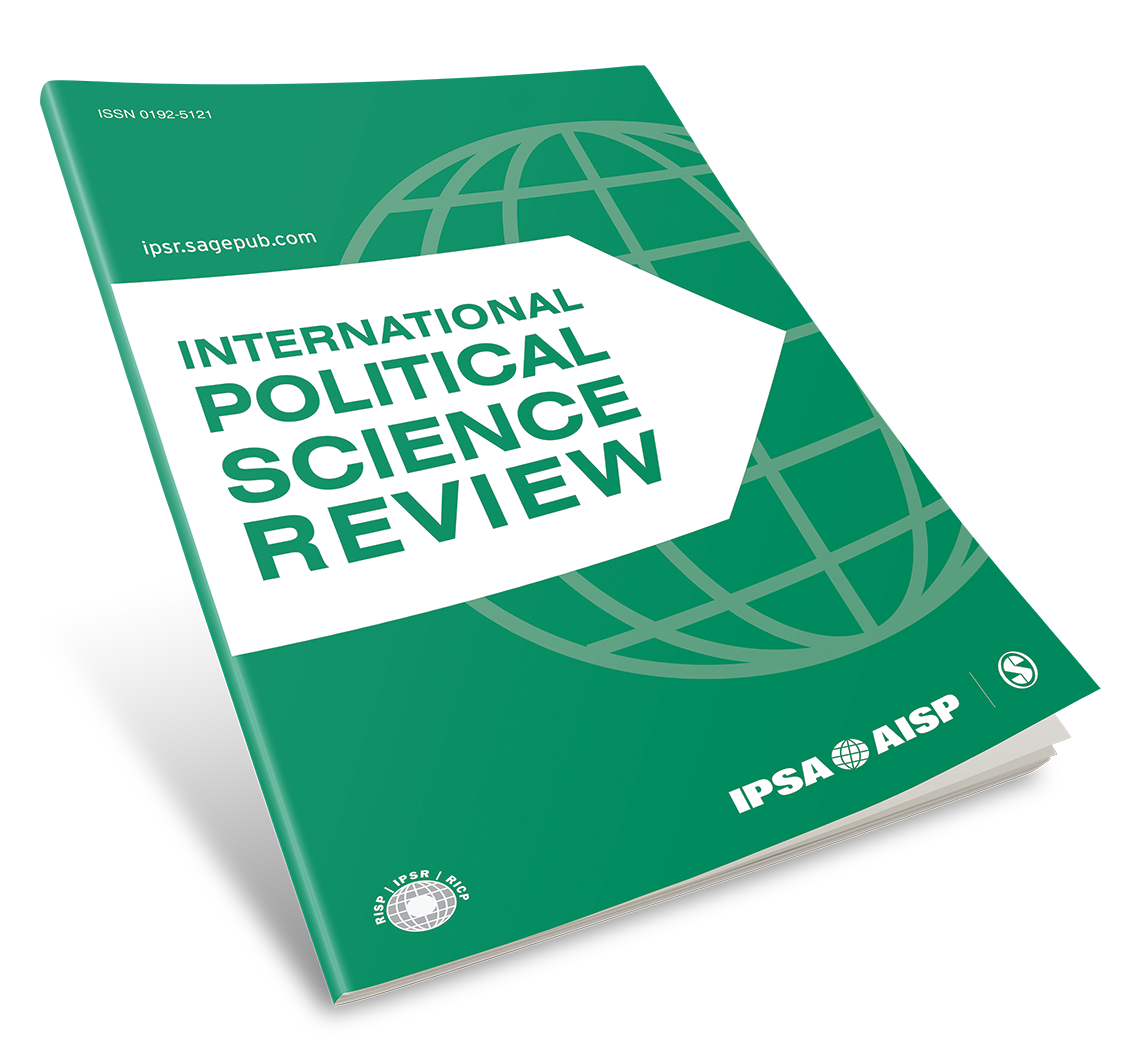
The latest issue of the International Political Science Review (IPSR) (Volume 47, Number 4, September 2026) features nine articles on topics including democracy, inequality, political communication, research ethics, polarization, authoritarianism, electoral behaviour, and public opinion. IPSA members can access all issues of the journal, including the IPSR archive dating back to 1980, through the My IPSA menu.
|
|
|
|
DISCOVER MEMBERSHIP BENEFITS AND BECOME AN IPSA MEMBER FOR 2027
|
IPSA invites you to renew your membership or join our global political science community for 2027. Your commitment allows IPSA to pursue its mission to support the development of political science worldwide, particularly in the Global South. Last year, IPSA revised its individual membership fee structure to more accurately reflect the diverse financial realities of our global membership. |
|
| |
|
1) The Global Disinformation Index (GDI) has released Monetisation of Harmful Content in the German Online Ecosystem, its report examining the financial incentives sustaining harmful German-language content. The study covers 81 sources and revenue streams, including advertising, subscriptions, donations and affiliate marketing. Major political and geopolitical events can also generate engagement and revenue spikes. The findings provide evidence for research on disinformation, platform governance and the political economy of digital information (Thematic Networks on the IPSAPortal).
2) The Elections Archive (THEA) released a major dataset update, adding information from 87 elections across 24 countries and territories. Its Data and Documentation section provides constituency-level results for parliamentary and European elections, georeferenced electoral districts and party nationalization measures. The updated Upper Chamber Elections Archive covers 268 elections across 30 countries and territories, with downloadable datasets in SPSS, Stata, R and Excel formats, alongside codebooks and party classifications (Special Collections on the IPSAPortal).
3) The OECD Survey on Drivers of Trust in Public Institutions 2026 looks at perceptions of government across 33 OECD countries and five accession candidates. Only 40% of respondents report high or moderately high trust in national government, compared with 43% expressing low or no trust; and though 68% believe voting influences government decisions, just 31% feel that people like them have a say in policymaking. The publication includes country profiles and comparative indicators, while the dedicated Trust Survey Data section provides methodological documentation and access procedures for research microdata (Official Records on the IPSAPortal).
4) The 2026 edition of The Gender Snapshot, published by UN Women and UN DESA, presents updated evidence on gender equality across all 17 Sustainable Development Goals. According to the report, women hold 27.4% of parliamentary seats, compared with 22.3% in 2015, while their representation in local government has stagnated at 35.6% since 2023. The accompanying UN SDG Global Database offers comparative indicators for examining political representation, institutional inequalities and progress towards gender equality (Special Collections on the IPSAPortal).
|
|
|
|
International Political Science Association | Montreal, Canada ipsa.org |
|
|
|
|