If you can't see this newsletter properly, please click here |
|
|
IPSA NEWSLETTER – April 2026 |
|
|
IPSA LAUNCHES NEW ONLINE WORKSHOP SERIES
FOR AFRICA-BASED SCHOLARS
Call for Applications: 8 June - 9 July 2026
|
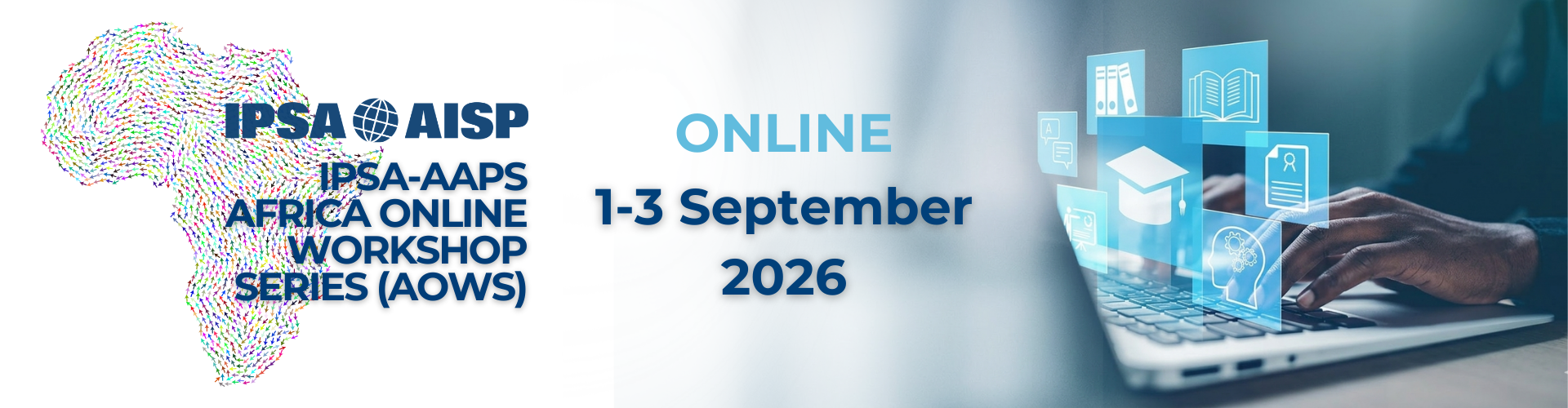
The IPSA–AAPS Africa Online Workshop Series (AOWS) is a new initiative designed to support graduate students and junior scholars at Africa-based institutions. The program offers mentoring, skills development and networking opportunities, with a focus on strengthening research design, academic writing, and professional development. Applications for the 2026 edition of the program will be open from 8 June to 9 July 2026. |
|
|
CALL FOR PROPOSALS OPEN
FOR IPSA’S REGIONAL CONFERENCE IN WROCŁAW
Deadline: 13 May 2026
|
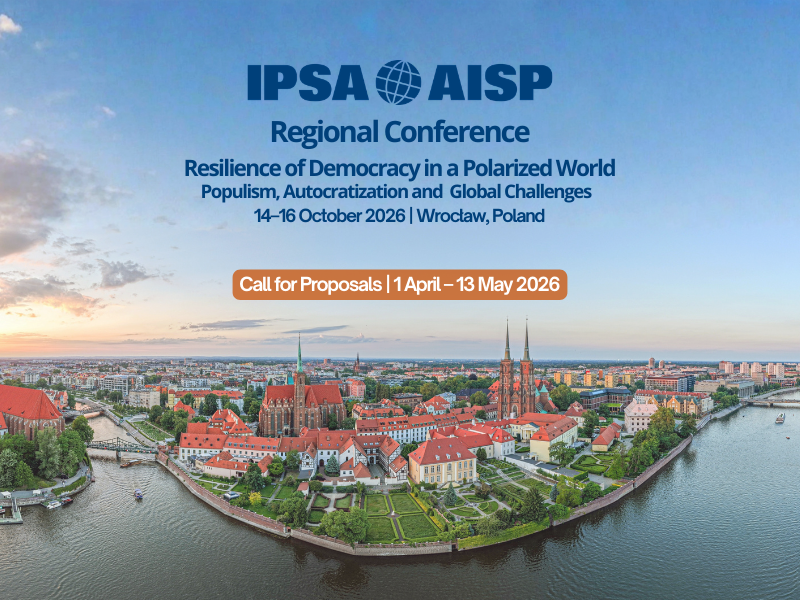
The Call for Proposals for IPSA’s Regional Conference on the theme Resilience of Democracy in a Polarized World: Populism, Autocratization, and Global Challenges, is open until 13 May 2026. The regional conference will take place from 14–16 October 2026 in Wrocław, Poland. We welcome paper and panel proposals that examine democratic resilience, erosion, and transformation from theoretical, empirical, and comparative perspectives. |
| SUBMIT YOUR RESEARCH TO IPSA’S ONLINE
WORK-IN-PROGRESS SESSIONS (WiPS)
Deadline: 6 May 2026 |
The Call for Papers for the second edition of IPSA’s online Work-in-Progress Sessions (WiPS) is open until 6 May 2026. The Work-in-Progress Sessions (13–19 July 2026) aim to establish a series of interactive workshops where individual IPSA members can present and engage in in-depth discussions about their research with like-minded colleagues who share similar interests. |
|
|
| IPSA INTRODUCES NEW JOURNAL GUIDELINES ON GENERATIVE AI USAGE FOR SUBMITTED MANUSCRIPTS
|
IPSA has developed Journal Guidelines on Generative AI Usage for Submitted Manuscripts, approved at its 151st Executive Committee meeting held in Rome on 17–18 April 2026. The IPSA Journal Guidelines require authors to clearly disclose any use of generative AI in their manuscripts. |
|
|
NOW ACCEPTING SUBMISSIONS: IPSA’S GOVERNANCE REVIEW JOURNAL |
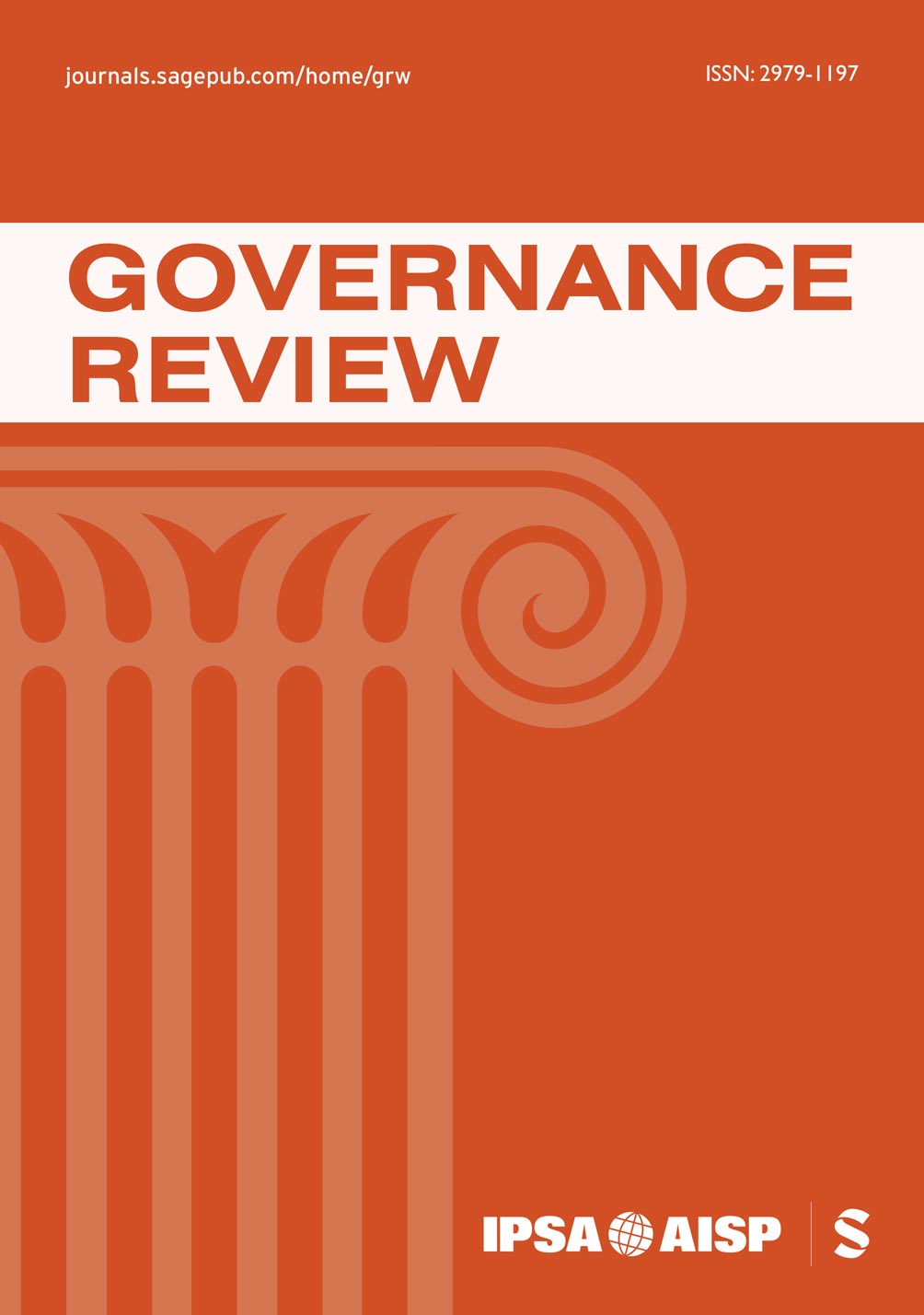
Submissions are now open for IPSA’s new journal, Governance Review, to be published by Sage in January 2027. The journal’s website is accepting manuscript submissions, and we warmly invite political scientists to contribute their work. Detailed submission guidelines are available on the website. |
| NEW ISSUE OF IPSR PUBLISHED (MARCH 2026) |
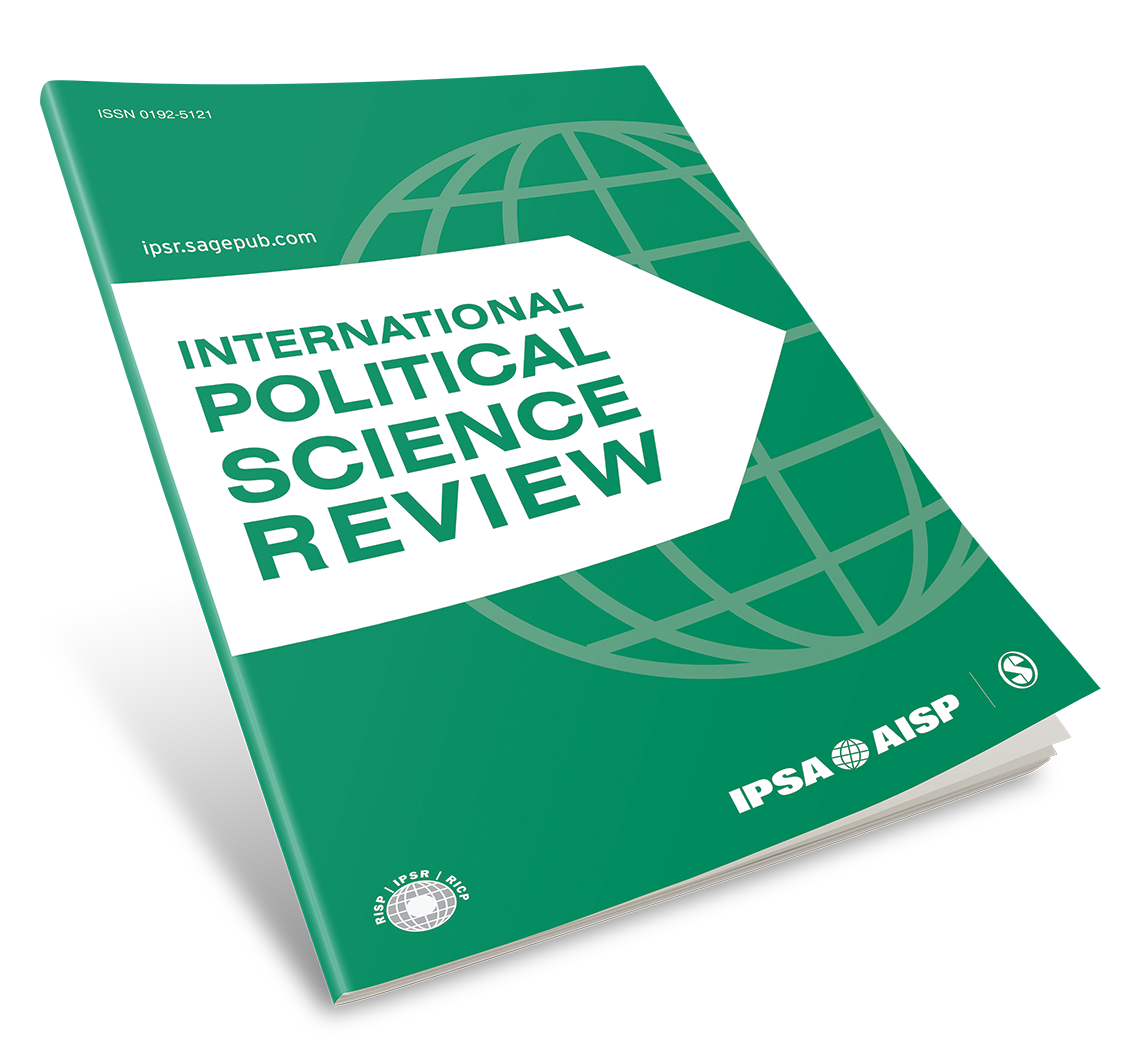
The March 2026 issue of the International Political Science Review (Volume 47, Number 2) features many current issues dominating world politics. IPSA members can access the full IPSR archive dating back to 1980 through the MyIPSA menu. |
|
|
IPSA AT THE 2026 UK PSA ANNUAL CONFERENCE IN OXFORD |
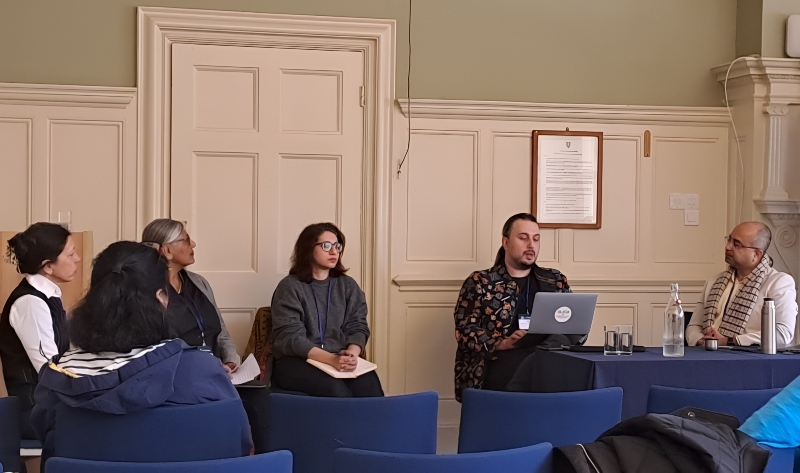
IPSA was present at the 2026 Annual Meeting of the Political Studies Association (PSA UK), held in Oxford from 30 March to 1 April 2026. As part of the program, IPSA organized a roundtable discussion on academic freedom, chaired by IPSA Executive Committee member Indrajit Roy, who also serves as Chair of the IPSA Committee on Academic Freedom and Ethics. | | IPSA AT THE 2026 ISA CONVENTION IN COLUMBUS |
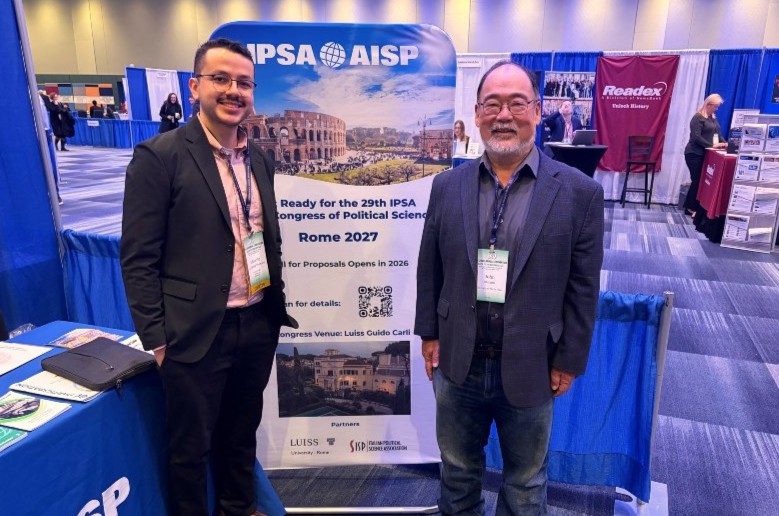
IPSA was present at the International Studies Association (ISA) 2026 Annual Convention in Columbus, USA. The 67th edition of the convention took place from 22 to 25 March 2026 under the theme Back to the Fundamentals: Rethinking Knowledges, Practices, and Imaginaries of the World. IPSA was represented at the #ISA2026 by Executive Committee member John Ishiyama and Eduardo da Nóbrega Monteiro from the Secretariat. |
|
|
APPLICATIONS NOW OPEN FOR THE 2026 IPSA-CONCORDIA SUMMER INSTITUTE IN APPLIED DIPLOMACY |
Applications are now open for the 2026 IPSA-Concordia Summer Institute in Applied Diplomacy, which will be held in Montréal, Canada, and virtually from 17 to 27 August 2026. We invite graduate students, early-career researchers, and professionals to participate in this year’s edition. |
|
APPLY FOR THE 2026 IPSA-NUS SUMMER SCHOOL FOR SOCIAL SCIENCE RESEARCH METHODS |
The 15th Annual IPSA-NUS Summer School for Social Science Research Methods will be held at the National University of Singapore from 29 June to 3 July 2026. All classes will be offered in person on the NUS campus. For the latest details on the Methods School courses, instructors, financial assistance, and registration discounts, please visit the school website. |
|
|
1) Developed by the V-Dem Institute, the Digital Society Project (DSP) provides a comprehensive dataset on the relationship between digital technologies and democratic governance. The latest release (Dataset v8) covers the 2000–2025 period across 179 countries. The dataset includes indicators on online censorship, disinformation, and government control of digital spaces. It enables systematic cross-national and longitudinal analysis, with a special focus on coordinated information manipulation and state influence over online media. A detailed codebook and multiple download formats make it especially suitable for empirical research on digital politics and information integrity (Special Collections on the IPSAPortal).
2) The European Digital Media Observatory (EDMO), coordinated by the European University Institute, is a hub for research on and monitoring of disinformation within the digital public sphere in Europe. The platform is part of the European Union’s strategy for countering online misinformation and strengthening democratic resilience. It brings together a network of national and regional hubs across 28 countries and connects researchers, fact-checkers, and media practitioners. EDMO provides access to a repository of fact-checking articles and a scientific publications repository, thereby allowing users to explore disinformation narratives and platform dynamics. It also offers reports and analyses and supports cross-country comparisons through its network of national hubs (Thematic Sites on the IPSAPortal).
3) The Observatory on Social Media (OSoMe), hosted by Indiana University, is a research centre focused on the analysis of online information diffusion and manipulation. Under the purview of computational social science, the project develops tools to study how content spreads across platforms and how coordinated campaigns operate. OSoMe provides access to a suite of interactive analytical tools, including OSoMeNet for network visualization and Coordiscope for detecting coordinated activity. These tools allow researchers to generate their own data and visualizations on information cascades, bot activity, and amplification dynamics. Rather than offering static datasets, OSoMe enables dynamic analysis of digital communication processes (Research Institutes on the IPSAPortal).
|
|
|
International Political Science Association | Montreal, Canada ipsa.org |
|
|
|