If you can't see this newsletter properly, please click here |
|
|
IPSA NEWSLETTER – November 2025 |
|
|
MARK YOUR CALENDAR:
#IPSA2027 WORLD CONGRESS
24-28 JULY
|
The #IPSA2027 World Congress of Political Science will be held in Rome, Italy, from 24 to 28 July 2027 in collaboration with Luiss Guido Carli and the Italian Political Science Association (SISP). The Congress program will be developed by Program Co-Chairs Vanessa Elias de Oliveira and Francesca Longo, under the theme Uncertain Democracies: Rethinking Governance in a Changing Global System. The Congress page is now available on the IPSA website.
|
| |
|
IPSA PRESENT AT THE AAPS CONGRESS IN SENEGAL |
IPSA President Yuko Kasuya and several Executive Committee members will be in Dakar, Senegal, from 7 to 10 December 2025 to participate in the 18th Biennial Conference of the African Association of Political Science (AAPS). This year’s conference will be held under the theme The State, Citizens, Sovereignty and Africa in Global Politics. |
|
|
JOHN ISHIYAMA AT UNAM TO ADDRESS THE ROLE OF POLITICAL SCIENCE IN CHALLENGING TIMES |
IPSA Executive Committee member and former APSA President John Ishiyama delivered a keynote address at the National Autonomous University of Mexico on 30 October 2025. His lecture, titled Whither Political Science in an Uncertain World? Challenges, Trends, and Opportunities, discussed the importance of political science education in addressing the challenges to democracy and how educators can better prepare students. |
| |
|
IPSA WEBINAR PROVIDES GUIDANCE ON
IDENTIFYING PREDATORY JOURNALS |
To mark World Science Day for Peace and Development on 10 November, IPSA hosted a webinar titled The Predation Index: A Tool to Discover Predatory Journals. Chaired by IPSA Executive Director Kim Fontaine-Skronski, the session featured International Political Science Review (IPSR) Co-Editors Daniel Stockemer and Annika Hinze, who discussed the issue of predatory journals and introduced the Predation Index, a new online tool on the IPSA website designed to help political science researchers identify potentially predatory publications.
|
|
|
| TIME TO RENEW YOUR MEMBERSHIP OR BECOME
AN IPSA MEMBER FOR 2026 |
IPSA has launched its membership campaign for 2026! We invite you to renew your membership or become a member of our global community of political scientists. Join us in 2026 to continue strengthening our global political science community and shaping the future of the discipline together! |
|
|
IPSR SPECIAL ISSUE: INCLUSION AND COMMISSIONS IN PEACE PROCESSES |
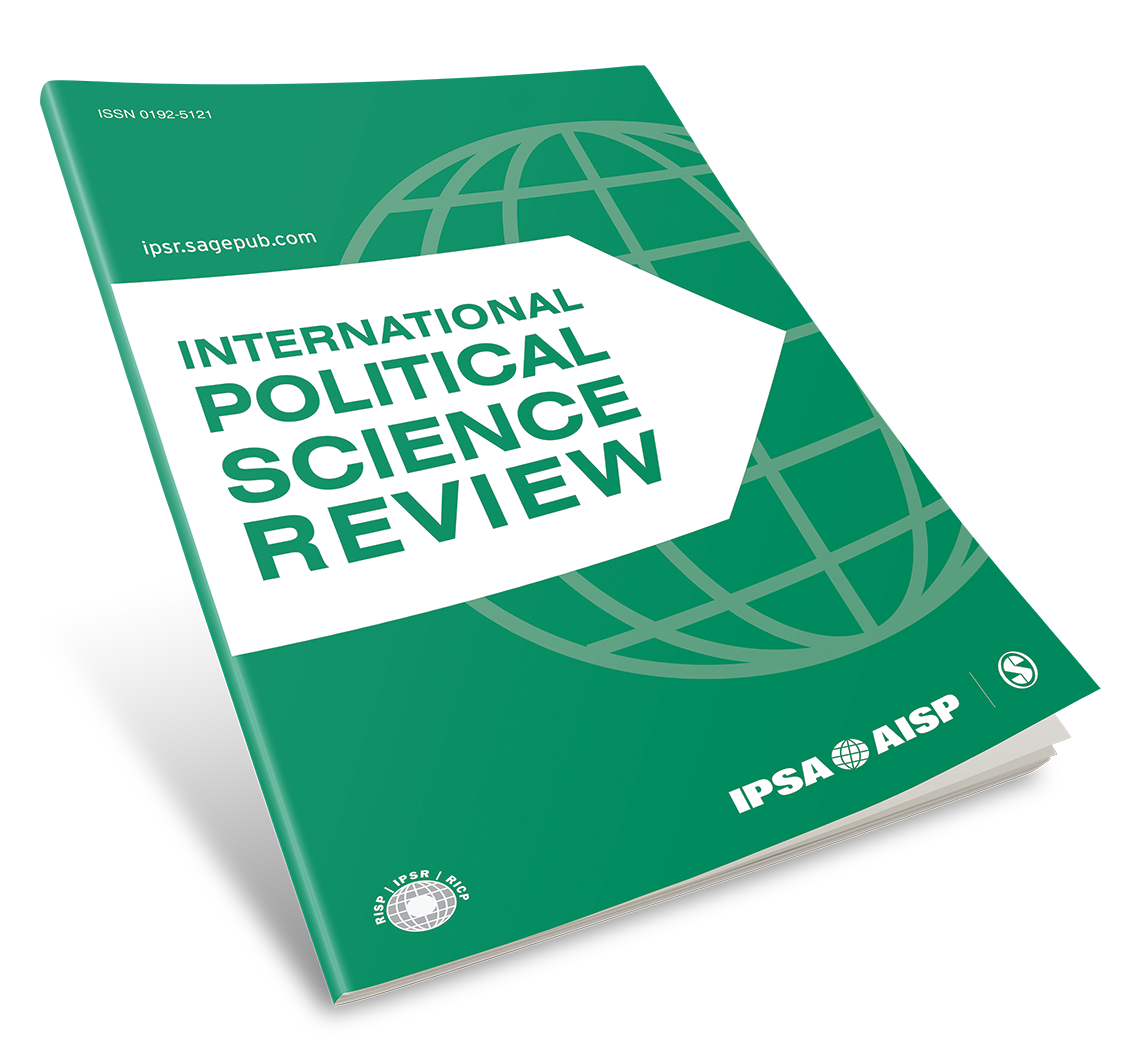
The latest issue of the International Political Science Review (IPSR) for November 2025 (Volume 46, Number 5) features a special feature on inclusion and commissions in peace processes. It highlights the crucial role of inclusion, both in terms of who is included as well as how and when inclusion is implemented, and to what effect. |
| |
|
HELLENIC POLITICAL SCIENCE ASSOCIATION HOSTS ITS 12th NATIONAL CONGRESS IN ATHENS |
The 12th National Congress of the Hellenic Political Science Association was held from 30 October to 1 November 2025 in Athens. Held under the theme Democracy at Crossroads: The Crisis of Liberal Democracy and the Threat of Authoritarianism, the Congress examined the global decline of liberal democracy, the rise of autocratic tendencies, and the erosion of trust in political institutions. |
| FINNISH POLITICAL SCIENCE ASSOCIATION CELEBRATES ITS 90th ANNIVERSARY |
The Finnish Political Science Association, a long-standing Collective member of IPSA, marked its 90th anniversary on 10 October 2025. On behalf of IPSA, President Yuko Kasuya sent a congratulatory message highlighting Finland’s contribution to IPSA and the global political science community. IPSA warmly congratulates the Finnish Political Science Association and all its members on this significant milestone. |
|
|
IPSA WELCOMES TWO NEW TEAM MEMBERS |
The IPSA Secretariat in Montréal is delighted to welcome two new team members: Andrea Moore, World Congress and Event Assistant, and Eduardo Monteiro, Administrative Assistant. Andrea and Eduardo will support the World Congress team and contribute to IPSA events and services. |
|
|
1) The State of the Digital Decade 2025 report assesses Europe’s progress toward its digital transformation goals halfway to the 2030 deadline. While progress is evident in areas such as smarter public services and broader 5G coverage, significant strategic gaps remain. Europe continues to rely heavily on foreign providers of AI, cloud services, and semiconductors. What’s more, rising energy demands threaten to hinder digital innovation. The core report is accompanied by country reports and fact pages, as well as numerous staff working documents. All of these documents, along with supporting studies such as the Special Eurobarometer and the eGovernment benchmark study, are available on the website (Official Records on the IPSAPortal).
2) Hosted by the University of Michigan and supported by over 750 partner institutions worldwide, the Inter-university Consortium for Political and Social Research (ICPSR) remains a leading global hub for access to high-quality social and political data. In October 2025, ICPSR unveiled new datasets exploring comparative politics, social media, digital electoral behavior, and online participation. These resources are available in multiple formats and supported by detailed technical documentation and analysis tools. The archive is continuously updated to enable researchers around the world to study the ways in which digitalization is reshaping politics and society, from voter engagement on social platforms to global patterns of online participation (Research Institutes on the IPSAPortal).
3) The OECD report, 'Governing with Artificial Intelligence: The State of Play and Way Forward in Core Government Functions,' explores how artificial intelligence is transforming public policy evaluation as part of the OECD’s broader work on AI governance and innovation in public administration. The document analyzes how AI tools can enhance the design, implementation, and analysis of policy evaluations by processing vast amounts of data: AI can reduce evidence synthesis time from 15 months to a few hours and process randomized control trial assessments in 53 seconds, compared to 28 minutes manually. Case studies from the World Bank and OECD environmental policy evaluations demonstrate AI’s capacity to identify new patterns and improve portfolio analysis across dozens of countries. Despite the progress, however, the report notes that the use of AI in policy evaluation remains limited compared to other government areas, indicating significant scope for development (Thematic Networks on the IPSAPortal).
|
|
|
International Political Science Association | Montreal, Canada ipsa.org |
|
|
|